

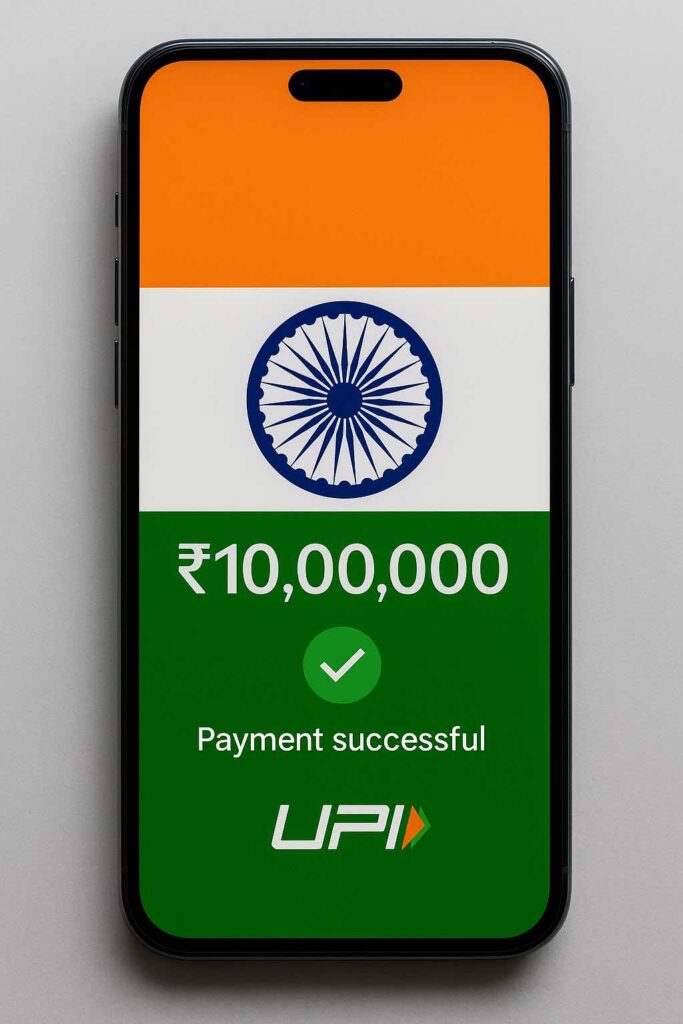
On September 15, 2025, NPCI raised the UPI daily aggregate limit from ₹2 lakh to ₹10 lakh per Virtual Payment Address (VPA). At the same time, the per-transaction cap doubled from ₹1 lakh to ₹2 lakh and the transaction count per day is now unlimited. Here’s a clear, simplified guide to what’s changed, who it affects, and how to make large UPI payments smoothly.
1. What’s Changed? Old vs. New UPI Limits
| Feature | Old Limit | New Limit |
|---|---|---|
| Per-Transaction Maximum | ₹1 lakh | ₹2 lakh |
| Daily Total per VPA | ₹2 lakh | ₹10 lakh |
| Number of Transactions per Day | Up to 10 | Unlimited |
- Per-Transaction: You can now send up to ₹2 lakh in a single payment.
- Daily Total: Each VPA can now process up to ₹10 lakh in total across all transactions.
- Transaction Count: Previously capped at 10, you can now make unlimited UPI payments until you hit the ₹10 lakh daily total.
2. Limits by Payment Category
Some payment types have lower caps even under the new regime. Here’s a quick reference:
| Category | New Daily Cap per VPA | How It Works |
|---|---|---|
| Peer-to-Peer (P2P) | ₹10 lakh | Personal transfers via UPI ID or QR code |
| Merchant Payments | ₹10 lakh | Retail, e-commerce, bill payments |
| Insurance Premiums | ₹5 lakh | Payments to insurers using UPI biller IDs |
| Demat Account Funding | ₹5 lakh | Adding funds to trading or demat accounts |
| Utility Bills | ₹5 lakh | Electricity, water, gas, telecom |
| Education Fees | ₹5 lakh | School and college fee payments |
| Government Fees | ₹2 lakh | Taxes and penalties via government portals |
3. Smart Strategies for High-Value UPI Payments
- Split Large Transfers
- For amounts above ₹2 lakh, break into multiple ₹2 lakh transactions.
- Ensure the total of all transfers doesn’t exceed ₹10 lakh in a day.
- Use Merchant-Billed Invoices
- Insurers and large merchants often support single invoices up to ₹5 lakh.
- This avoids splitting and ensures smooth processing.
- Schedule Payments
- Many UPI apps let you schedule future transfers.
- Spread payments over days to stay under the daily cap and retain working capital.
- Monitor Totals in Real Time
- Enable SMS or email alerts from your bank.
- Turn on push notifications in your UPI app to track cumulative usage.
4. Step-by-Step Guides for Common Scenarios
A. Paying an Insurance Premium of ₹5 lakh
- Open your UPI app (Google Pay, PhonePe, etc.) and go to Pay Bills → Insurance.
- Select your insurer (e.g., LIC, HDFC Life).
- Enter your policy number and amount (up to ₹5 lakh).
- Confirm details and enter your UPI PIN.
- Save or screenshot the confirmation for your records.
B. Funding a Demat Account with ₹5 lakh
- In your trading platform, choose Add Funds → UPI.
- Enter ₹5 lakh and your VPA.
- Approve the UPI mandate in your UPI app and enter your PIN.
- Check your trading account—funds arrive within minutes.
C. Sending ₹8 lakh to a Friend
- Plan four transactions of ₹2 lakh each.
- In your UPI app, send ₹2 lakh × 4 to the same VPA (total ₹8 lakh).
- Approve each transfer with your UPI PIN.
- Verify total transfers stay under ₹10 lakh for the day.
5. Tips for Smooth High-Value Payments
- Update Your App: Always run the latest version of your UPI app for new features and security.
- Check Merchant Limits: Some billers may still enforce lower caps—confirm with them before payment.
- Keep Balance Ready: Ensure your bank account has sufficient funds to avoid failed transactions.
- Use Trusted Wi-Fi or Mobile Data: Large transfers can fail on unstable networks.
Conclusion
The new ₹10 lakh daily UPI cap and ₹2 lakh per-transaction limit make large digital payments far more convenient. By understanding category-specific caps, splitting payments smartly, and using merchant-billed invoices, you can handle high-value transactions seamlessly. Follow the steps and tips above to leverage UPI’s enhanced capacity effectively while staying within NPCI’s guidelines.
- The 2026 Nationwide 3 Days Bank Strike: Why India’s Banking Backbone is Breaking
 Discover the root causes of the 2026 nationwide bank strike. Explore the struggle for 5-day banking, fair incentives, and why a Uniform Banking Standard is urgently needed to protect the dignity and job security of all bank employees.
 - UPI MDR 2026: Is UPI Still Free? Here’s the Real Answer
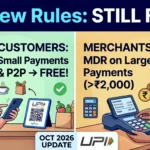 A simple guide to the new UPI MDR rules effective October 15, 2026 — who pays the 0.4% merchant charge, who doesn’t, and why UPI stays free for customers.
 - Sole Proprietorship in India: Do You Need Registration? Documents & Benefits Explained
 Learn how to start a sole proprietorship firm in India, understand registration requirements, benefits, GST and Udyam registration, and discover the essential documents needed to open a business bank account. A simple beginner’s guide to launching your business confidently and correctly.
 - What is HUF? The Ancient Rule Letting Modern Families Unlock Double Tax Benefits
 Want to legally save on income tax? Discover how a Hindu Undivided Family (HUF) protects wealth and maximizes tax benefits. Explore our complete guide on HUF eligibility, the 2005 amendment, and step-by-step instructions to open an HUF bank account.
 - Exposed by RTI: Banks Recover 74% from Small Borrowers, Just 14% from Giants
 Shocking RTI data reveals a massive banking divide: banks recover 74% of bad loans from small borrowers but only 14.5% from corporate giants. Discover why ordinary citizens face harsh recovery agents while large defaulters enjoy massive loan write-offs.
 - HDFC Bank Q3 Surprise: Profit Jumps 11.5% – Why Experts Call It a ‘Screaming Buy’ at ₹930
 HDFC Bank’s Q3 FY26 results shine: 11.5% profit surge to ₹18,653 Cr, GNPA at 1.24%, deposits up 11.5%. Beats estimates amid deposit wars—strong buy for 2026? Stock eyes ₹1,000 breakout.
 - Withdraw PF Money in Seconds? EPFO’s New UPI Update is the Game-Changer
 Discover EPFO UPI withdrawal: Instant PF access in minutes via PhonePe or Google Pay. Step-by-step guide, eligibility, benefits, and tax rules for 2026. Skip delays—empower your savings today!
 - The Truth Behind the “TCS Employee Salary Drop”: Viral News, Variable Pay and What It Means for You
 Discover the real reasons behind the viral TCS employee salary drop. From variable pay cuts to strict WFO mandates and performance bands, learn why IT take-home pay is shrinking and how to protect your earnings effectively.
 - Stop! Don’t “Liquidate” Your ₹500 Notes Yet: What the New RBI Circular Actually Says
 GOI debunks viral ₹500 note discontinuation rumor. Fake news claimed RBI would ban notes by March 2026. Official clarification: ₹500 notes remain legal tender, ATMs continue dispensing them. Learn how to spot fake currency news and verify financial information.
 - Cheques are Making a Huge Comeback in India—and They’re Now as Fast as UPI!
 India’s real-time cheque clearing system launched October 2025, processing cheques in hours instead of days. While Phase 2 was postponed, Phase 1 delivers same-day clearing with auto-approval features. Learn how continuous clearing speeds up banking for businesses and freelancers.
Thanks for sharing. I read many of your blog posts, cool, your blog is very good.
Pingback: Save ₹5,000+ Annually With RBI Zero-Balance Account Rules
Pingback: UPI Transaction History: Track Spending & Build Wealth