
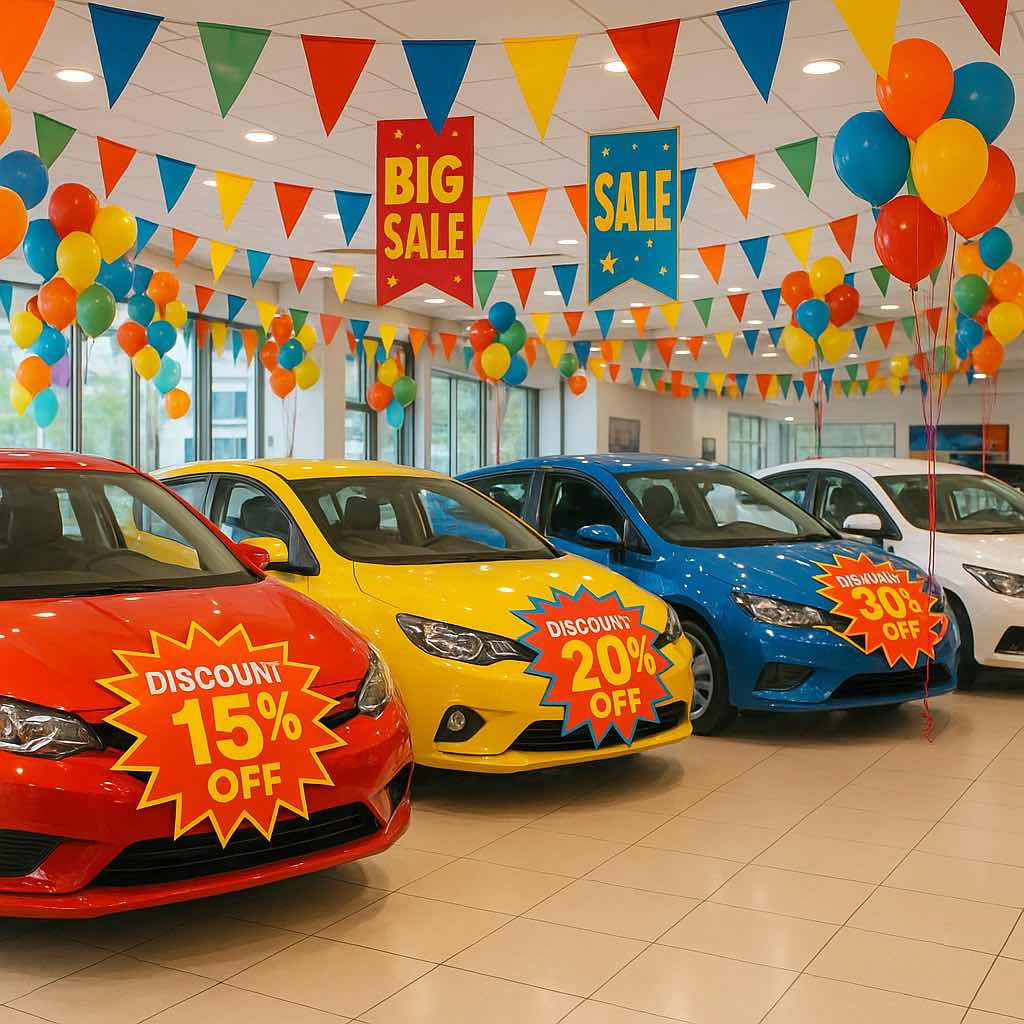
The new GST 2.0 framework effective from September 22, 2025 slashes tax rates on most vehicles and auto parts making cars immediately more affordable just in time for the festive buying spree. At the same time, banks and NBFCs stand to gain from a surge in auto loan demand underpinned by both lower on-road prices and improved liquidity conditions. Here is a clear category-wise breakdown of what buyers will save on various vehicle segments and how these savings translate into lower monthly EMIs for auto loans followed by an analysis of the broader impact on the banking sector.
Key Takeaway
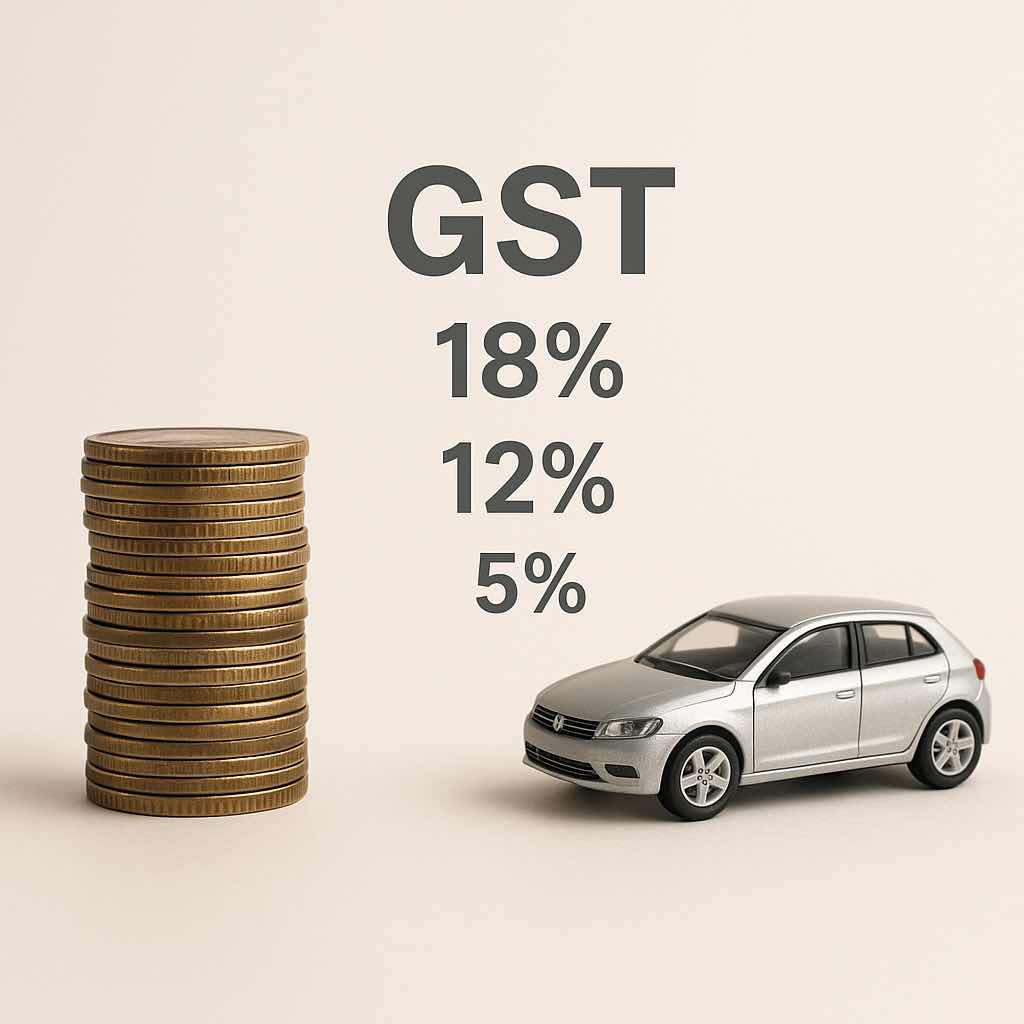
By rationalising tax slabs—from a four-tier system to two core rates (18% for mass-market vehicles and 40% for luxury/SUVs, with 5% preserved for EVs)—GST 2.0 is set to reduce ex-showroom prices by up to ₹3.5 lakh per unit, driving festive-season demand and catalysing auto loan growth across India’s banking landscape.
1. Category-Wise Price Changes in the Automobile Sector
Under GST 2.0, most passenger vehicles and auto parts now attract 18% GST (down from 28% plus cess), while large SUVs and luxury cars move to a 40% slab (previously up to 50% including cess). Electric vehicles remain at 5%. The table below summarizes the old versus new tax incidence and expected ex-showroom price impact:
| Vehicle Category | Old Tax Rate (GST + Cess) | New GST Rate | Typical Price Cut |
|---|---|---|---|
| Small cars (<4 m, ≤1200 cc petrol / ≤1500 cc diesel) | 29–31% | 18% | ₹65,000–₹1.10 lakh |
| SUVs & luxury cars (>4 m, >1500 cc) | Up to 50% | 40% | ₹1.40–₹3.49 lakh |
| Two-wheelers up to 350 cc | 28% | 18% | ₹5,000–₹15,000 |
| Auto parts | 28% | 18% | Varies by part |
| Electric vehicles | 5% | 5% | No change |
2. Sample Model Savings
Automakers such as Hyundai, Tata, Mahindra, Toyota, MG, and Maruti have already announced full price cuts passed on to buyers. The examples below illustrate potential savings on popular models:
| Brand & Model | Segment | Price Cut |
|---|---|---|
| Tata Nexon | Sub-4 m SUV | Up to ₹1.55 lakh |
| Hyundai Creta | Mid-size SUV | Up to ₹3.50 lakh |
| Mahindra XUV700 | Large SUV | Up to ₹1.43 lakh |
| MG Gloster | Premium SUV | Up to ₹3.04 lakh |
| Maruti Swift | Small hatchback | Up to ₹75,000 |
| Toyota Fortuner | Full-size SUV | Up to ₹3.49 lakh |
3. Impact on Auto Loan Monthly EMI

Lower vehicle prices directly reduce the principal loan amount required, translating into significant monthly EMI savings. Assuming a 5-year (60 months) loan at 7.5% annual interest, here are illustrative EMI comparisons for two representative segments:
| Segment | Original Price | Price Cut | Old EMI (₹) | New EMI (₹) | EMI Saving (₹) |
|---|---|---|---|---|---|
| Small Car (~₹8 lakh) | 800,000 | 110,000 | 16,030 | 13,826 | 2,204 |
| SUV (~₹20 lakh) | 2,000,000 | 200,000 | 40,076 | 36,068 | 4,008 |
These reductions mean buyers can either opt for lower equated monthly instalments or upgrade to a higher trim within the same budget.
4. Festival-Season Demand Catalyst
- Timing: With Navratri, Dussehra and Diwali around the corner, the discounted prices are primed to trigger a buying wave among cost-sensitive and aspirational buyers alike.
- Consumer Sentiment: Easier affordability often leads to pent-up demand being released during the festive season is historically the peak period for auto sales.
- EV Incentives: Keeping GST at 5% for electric vehicles reinforces policy focus on clean mobility by boosting EV adoption through sustained tax advantage.
5. Banking Sector: Auto Loan Growth and Credit Opportunities
5.1 Surge in Auto Loan Disbursements
Banks and non-bank lenders are poised to benefit from:
- Higher loan volumes: Vehicle affordability spurt could lift auto loan originations by 8–12% in the coming quarters.
- Improved asset quality: Formalisation under GST and digital credit scoring enhance borrower transparency and reducing delinquency risk.
- Margin maintenance: Although interest rates may compress slightly, but overall profitability can rise on greater loan throughput.
5.2 Liquidity Boost
- The phased CRR reduction has released roughly ₹62,000 crore into the system which is providing banks with extra funds to lend at competitive rates.
- Lower wholesale funding costs can be passed on to retail borrowers via marginally reduced lending rates to further stimulating demand.
5.3 Broader Credit Growth
Beyond auto loans, the GST-led price cuts on consumer durables like home appliances and farm equipment are expected to:
- Propel home and personal loans as households leverage higher disposable income.
- Support MSME lending by easing working-capital requirements for distributors and dealers in the auto ecosystem.
- Drive agricultural credit as inputs like tractors and harvesters attract lower taxes.
6. Best Practices for Buyers and Lenders

For Buyers
- Compare EMI options: Leverage lower EMIs to negotiate add-ons such as extended warranties or zero-interest schemes.
- Check lender offers: Festival-season financing deals often include down-payment rebates and processing-fee waivers.
- Consider EVs: Continued 5% GST on electric vehicles plus state subsidies can yield even greater savings.
For Banks and NBFCs
- Targeted marketing: Segment campaigns around small-car buyers and first-time buyers who stand to gain the most.
- Digital credit tools: Use AI-driven underwriting to quickly approve loans and capture market share during the festive window.
- Partnerships with dealers: Collaborate on bundled finance offers and in-showroom loan approvals to reduce customer drop-off.
Conclusion
GST 2.0 tax rationalisation marks a pivotal moment for India’s automobile sector by slashing prices across the board just as consumer sentiment peaks for the festive season. Buyers enjoy immediate cost savings and lower EMIs, while banks and NBFCs are set to ride a wave of auto loan growth, bolstered by surplus liquidity and enhanced creditworthiness under GST compliance. This dual impact underlines GST 2.0’s role as both a consumer boon and a catalyst for banking sector expansion and creating a win-win ahead of India’s biggest buying season.
- HDFC Bank Q3 Surprise: Profit Jumps 11.5% – Why Experts Call It a ‘Screaming Buy’ at ₹930
 HDFC Bank’s Q3 FY26 results shine: 11.5% profit surge to ₹18,653 Cr, GNPA at 1.24%, deposits up 11.5%. Beats estimates amid deposit wars—strong buy for 2026? Stock eyes ₹1,000 breakout.
 - Withdraw PF Money in Seconds? EPFO’s New UPI Update is the Game-Changer
 Discover EPFO UPI withdrawal: Instant PF access in minutes via PhonePe or Google Pay. Step-by-step guide, eligibility, benefits, and tax rules for 2026. Skip delays—empower your savings today!
 - The Truth Behind the “TCS Employee Salary Drop”: Viral News, Variable Pay and What It Means for You
 Discover the real reasons behind the viral TCS employee salary drop. From variable pay cuts to strict WFO mandates and performance bands, learn why IT take-home pay is shrinking and how to protect your earnings effectively.
 - Stop! Don’t “Liquidate” Your ₹500 Notes Yet: What the New RBI Circular Actually Says
 GOI debunks viral ₹500 note discontinuation rumor. Fake news claimed RBI would ban notes by March 2026. Official clarification: ₹500 notes remain legal tender, ATMs continue dispensing them. Learn how to spot fake currency news and verify financial information.
 - Cheques are Making a Huge Comeback in India—and They’re Now as Fast as UPI!
 India’s real-time cheque clearing system launched October 2025, processing cheques in hours instead of days. While Phase 2 was postponed, Phase 1 delivers same-day clearing with auto-approval features. Learn how continuous clearing speeds up banking for businesses and freelancers.
Good web site! I truly love how it is easy on my eyes and the data are well written. I’m wondering how I could be notified when a new post has been made. I have subscribed to your RSS which must do the trick! Have a nice day!
Thanks for your feedback! Please share it with your friends and family and keep encouraging.
Can you be more specific about the content of your article? After reading it, I still have some doubts. Hope you can help me.