
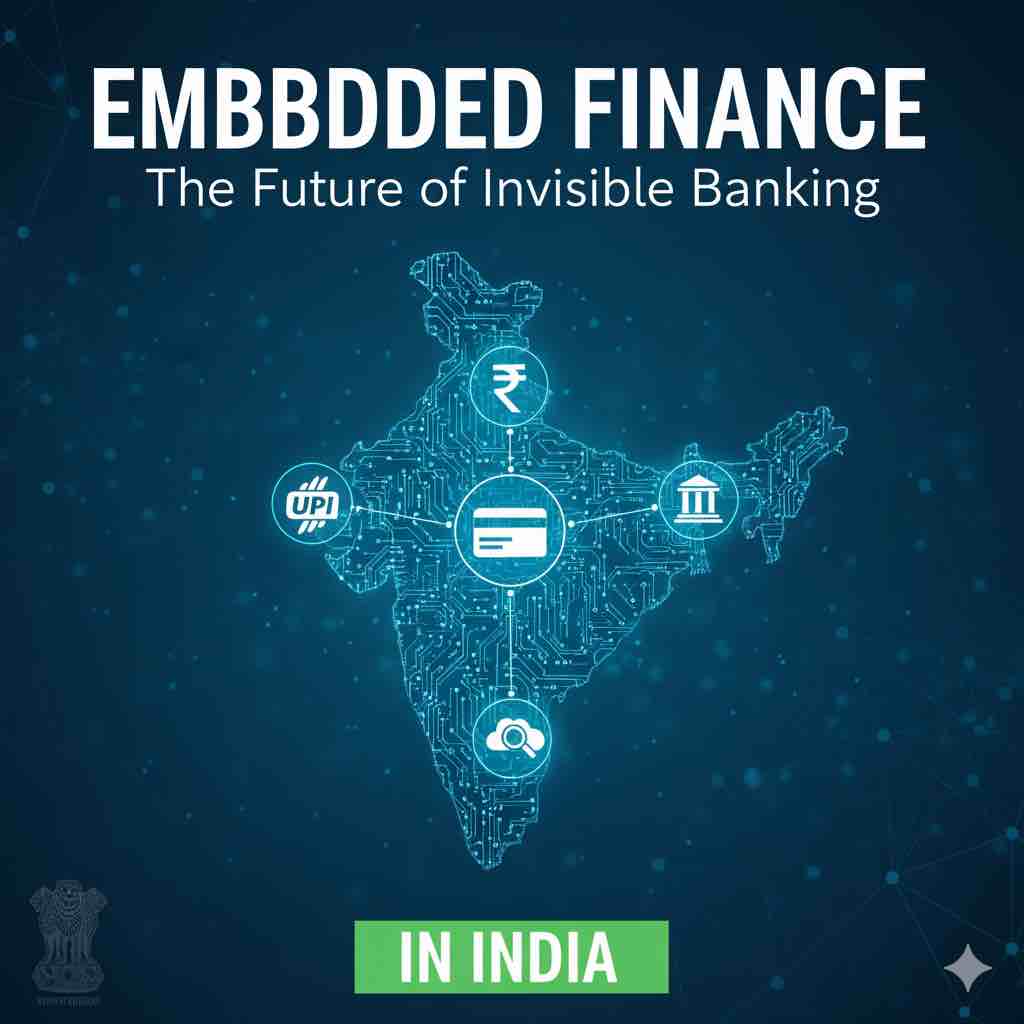
Banking just got a major glow-up, and you probably didn’t even notice. That’s the whole point.
Gone are the days when banking meant standing in endless queues or opening boring apps just to transfer money. Welcome to the era of embedded finance – where your money moves as effortlessly as your Instagram Stories, right inside the apps you already love.
Think about it: you’re scrolling through Flipkart, spot those killer sneakers, click “Buy Now, Pay Later,” and boom – you just got instant credit without ever leaving the shopping app. That ride you booked on Uber? The payment happened automatically, along with micro-insurance, all in the background. This is invisible banking in action, and it’s quietly revolutionizing how India handles money.
What Exactly Is Embedded Finance?
Embedded finance is basically the art of hiding financial services inside everyday apps and platforms. Instead of you going to a bank or opening a separate banking app, the financial service comes to you – exactly when and where you need it.
Here’s the simple breakdown: embedded finance integrates payments, loans, insurance, and even investments directly into non-financial platforms through APIs (Application Programming Interfaces). These are like digital bridges that connect banking services to your favorite shopping, travel, or food delivery apps.
The magic? You get financial services without the friction. No app-hopping, no form-filling marathons, no waiting.
How Does Embedded Finance Actually Work?
Behind every seamless payment or instant loan, there’s actually a sophisticated system working overtime (but you’d never know it).
The Three-Layer System:
Layer 1 – Licensed Financial Institutions: Traditional banks and NBFCs (Non-Banking Financial Companies) provide the actual financial products and hold regulatory licenses.
Layer 2 – Fintech Enablers: These are the tech wizards who build the APIs and infrastructure that make everything work smoothly.
Layer 3 – Platform Partners: Your favorite apps like Amazon, Zomato, Paytm, and Ola that integrate these services into their platforms.
When you click “Pay Later” during checkout, here’s what happens in seconds: your request zips through APIs to the fintech partner, gets approved through quick risk assessment using alternative data (like your shopping patterns or transaction history), credit gets approved, and you complete your purchase. The entire process feels instant because the financial infrastructure is invisible – embedded right into your shopping experience.
Embedded Finance in Your Daily Life: Real Examples
E-commerce Platforms
Amazon Pay Later and Flipkart Pay Later let you shop now and split payments into easy EMIs – up to ₹1 lakh instant credit with just 30 seconds of setup. No separate loan application, no bank visits. Over 75% of Indian Gen Z now rely on digital payment platforms for routine transactions, making BNPL (Buy Now, Pay Later) a game-changer for affordable shopping.
Ride-Sharing & Food Delivery
Book an Ola ride, and you automatically get micro-insurance for a few rupees without even thinking about it. Pay through the app using UPI – PhonePe or Google Pay – and the transaction happens in literally seconds. India’s Gen Z is rapidly ditching cash and cards for UPI, embracing real-time, frictionless payments as the new normal.
Travel Bookings
Planning a trip on MakeMyTrip? Travel insurance pops up contextually during your flight booking, tailored exactly to your itinerary. You don’t search for insurance separately – it’s right there when you need it.
Small Business Tools
Platforms like Udaan and Jumbotail offer instant credit to small retailers for inventory purchases, while logistics startups embed fleet insurance and invoice factoring directly into their systems. This is democratizing access to business finance across urban and rural India.
Why Embedded Finance Is a Total Game-Changer for India
Convenience Level: 100
Imagine completing a purchase, getting a loan, and having insurance activated – all without leaving your shopping app. That’s the embedded finance promise. It eliminates the annoying steps of switching between apps, re-entering payment details, or navigating complicated banking portals.
Financial Inclusion on Steroids
India has over 900 million internet users, but traditional banking hasn’t reached everyone. Embedded finance changes this by bringing financial services to people wherever they are – on e-commerce platforms, gig economy apps, or social media. It’s especially powerful for underserved populations in rural areas who may not have easy access to physical bank branches.
Personalized Financial Products
Through data insights and behavioral analytics, embedded finance platforms can offer hyper-personalized products. If you’re a gig worker on Uber, you might get salary advances based on your completed rides. If you’re shopping for electronics, you might get tailored warranty and financing options.
Speed and Real-Time Everything
Digital wallets, UPI payments, and embedded lending happen in real-time. No more waiting days for loan approvals or payment confirmations. The entire financial ecosystem now operates at the speed of your smartphone.
The Numbers Don’t Lie: Embedded Finance Is Booming
India’s embedded finance sector is projected to explode from $5.75 billion in 2024 to $28.6 billion by 2029 – that’s a mind-blowing 37.8% annual growth rate. This isn’t just hype; it’s reshaping the entire financial landscape.
UPI transactions alone surged almost 46% to a record 17,220 crore in 2024, with PhonePe controlling 48.4% and Google Pay holding 37.3% of the market. These platforms have become the backbone of embedded payments across countless apps and services.
The BNPL market in India is set to reach $21.95 billion in 2025 and climb to $35.07 billion by 2030. With credit card penetration at just 5% in India, BNPL fills a massive gap by offering accessible, flexible payment options embedded right at checkout.
Gen Z Questions About Embedded Finance – Answered
Is embedded finance safe to use?
Yes, when done right. Reputable platforms use multi-factor authentication (OTPs, biometrics), end-to-end encryption, and strict KYC (Know Your Customer) compliance. The Reserve Bank of India (RBI) regulates these services through Digital Lending Guidelines, holding banks and NBFCs accountable for all activities.
Will using BNPL hurt my credit score?
Not usually. Most BNPL services conduct “soft” credit checks that don’t impact your credit score. However, missing payments or defaulting can affect your creditworthiness, so always pay on time.
How is this different from traditional banking?
Traditional banking requires you to visit branches or open separate apps for each service. Embedded finance brings these services directly into platforms you already use daily, making transactions seamless and contextual. It’s banking that disappears into the background.
Can anyone access embedded finance services?
Mostly, yes. The beauty of embedded finance is its accessibility. You don’t need a traditional credit history or even a credit card. Many platforms use alternative data like shopping behavior, app usage, or transaction patterns to assess eligibility.
The Future: What’s Next for Banking in India?
Fintech trends 2025 point toward an even more invisible, AI-powered financial future. Expect smart assistants that automatically manage your savings, investments that happen in the background based on your spending patterns, and insurance that activates contextually when you enter high-risk situations.
Digital banking India is evolving from mobile apps to ambient experiences embedded in smart homes, wearables, and even vehicles. By 2030, AI-powered banking solutions could manage up to 60% of personal financial operations – saving, spending, borrowing, and insuring – without you lifting a finger.
The future of banking India isn’t about better bank branches or shinier apps. It’s about banking becoming so seamlessly integrated into everyday life that you barely notice it’s there. Financial services will be triggered by context and behavior, not by you actively seeking them out.
Embedded Finance: Challenges to Watch
While embedded finance is revolutionary, it’s not without challenges:
Regulatory Complexity: Multiple stakeholders across industries make compliance tricky, with evolving rules around data privacy, KYC, and lending standards.
Data Privacy Concerns: Sharing sensitive financial data across platforms raises cybersecurity risks. India’s Digital Personal Data Protection Bill (2023) aims to address this.
Financial Risk Management: Integrating financial services into non-financial platforms can lead to inadequate underwriting or rising defaults during economic downturns.
Despite these challenges, the opportunities far outweigh the risks, especially as regulations mature and security measures strengthen.
The Bottom Line
Embedded finance is not just a trend – it’s the new normal for digital banking in India. For Gen Z, this means financial services that actually make sense: fast, convenient, and woven into the digital fabric of everyday life.
Whether you’re splitting an Uber fare, shopping on Flipkart with Pay Later, or getting instant business credit on a supply chain platform, you’re experiencing the future of invisible banking. And the best part? It’s only getting better.
The future of finance isn't in banks – it's everywhere you already are.
- Cheques are Making a Huge Comeback in India—and They’re Now as Fast as UPI!
 India’s real-time cheque clearing system launched October 2025, processing cheques in hours instead of days. While Phase 2 was postponed, Phase 1 delivers same-day clearing with auto-approval features. Learn how continuous clearing speeds up banking for businesses and freelancers.
 - You’re Already Using It: The Hidden ‘Embedded Finance’ Revolution Taking Over India in 2026
 India’s embedded finance market is exploding in 2026. Learn how UPI evolved into digital assets, BNPL transformed shopping, and financial services seamlessly integrated into your favorite apps. Discover five major trends reshaping how regular Indians manage money today.
 - Need a Loan? Use These 7 No-Gimmick Tactics to Fix Your CIBIL Score in Just 30 Days
 Boost your CIBIL score by 50+ points in just 30 days with proven tactics. Master payment history, reduce credit utilization, and dispute errors to unlock better loan approvals and lower interest rates. No gimmicks—just real strategies that work.
 - Why Your Old Chequebook Might Stop Working: Understanding India’s Bold Bank Consolidation
 Explore India’s ambitious PSU bank consolidation strategy reshaping the financial sector. Understand recent mergers, the government’s FY27 mega plan, and how bank consolidation impacts customers, employees, and the broader banking ecosystem.
 - Union Bank, BOI, and IOB: The Next Mega-Merger Wave is Coming. Here’s How Your Savings & Account Details Will Change
 India’s public sector banking faces a transformative merger wave. Finance Minister Sitharaman confirmed talks with RBI on consolidating 12 banks into six to seven globally competitive institutions. Expected announcements in April-May 2026 will reshape banking operations, employee roles, and customer services fundamentally.
 - Don’t Panic: Why Your Bank’s Website Address Just Changed (and How to Tell if It’s Real)
 The Reserve Bank of India mandated all Indian banks migrate to the exclusive .bank.in domain by October 31, 2025, to combat rising digital fraud. This restricted domain provides verified security, SSL encryption, and DNSSEC protection, making it significantly harder for cybercriminals to create fake banking websites and phishing scams targeting unsuspecting customers.
 - Why a Tiny $2.00 Bank Charge Could Be Your Biggest Warning Sign
 Reviewing your bank statements regularly and reporting lost cards immediately are your most powerful weapons against fraud. When you catch unauthorized transactions early, you’re already ahead of most fraudsters. Consumer fraud losses exceeded $12.5 billion in 2024, making vigilant account monitoring essential for protecting your financial security.
 - The End of the Banking App? Why Your Money is Quietly Moving Into the Apps You Use Every Day
 Embedded finance is reshaping banking in India by seamlessly integrating payments, credit, insurance into apps like e-commerce and ride-sharing. Discover how invisible banking offers instant, frictionless transactions, empowers financial inclusion, and defines the future of digital banking for Gen Z.
 - PNB Slashes Locker Rents by Up to 40%: See Your New Rates Starting at ₹750
 Punjab National Bank has slashed locker rent charges across all categories effective November 2025. Small lockers now cost ₹750 annually in rural areas, while urban medium lockers drop to ₹3,000. This 25% reduction makes secure storage affordable for Indian families safeguarding valuables and important documents.
 - New RBI Nomination Rules Are Now Live: The Simple Change to Prevent Your Funds From Being Locked
 The RBI’s new bank account nomination rules 2025 allow up to four nominees with digital registration. Learn how these changes simplify claim settlement, protect your family’s financial security, and why updating your nomination matters today.
Pingback: Embedded Finance 2026: UPI to Digital Assets Explained