
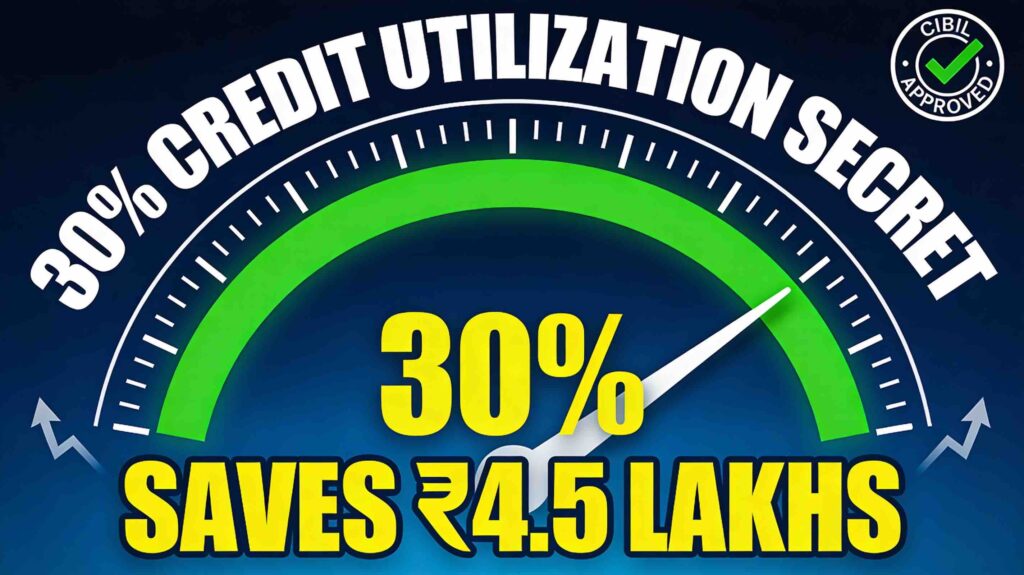
When you apply for a home loan, car loan, or even a premium credit card, the first thing lenders scrutinize isn’t just your salary—it’s your credit score. And buried in the calculation of that crucial three-digit number is a factor that can silently destroy your creditworthiness: credit utilization ratio. Yet most people have never even heard of it. That’s precisely why managing your credit utilization below 30% has become the best-kept secret to transforming your financial reputation.
This isn’t just about having a good credit score. This is about unlocking lower interest rates, instant loan approvals, and the financial freedom that comes with being seen as a responsible borrower. Let’s uncover why this simple strategy works and how you can implement it starting today.
What Is Credit Utilization Ratio and Why It Matters
Before diving into the transformation, you need to understand the basics. Credit utilization ratio is simply the percentage of your available credit that you’re currently using. It’s calculated by dividing your total outstanding credit card balance by your total credit limit across all your cards.
Here’s a practical example: If you have a credit card with a ₹1,00,000 limit and your current outstanding balance is ₹30,000, your credit utilization ratio is 30%. That’s (₹30,000 ùÍÞ₹1,00,000) × 100 = 30%.
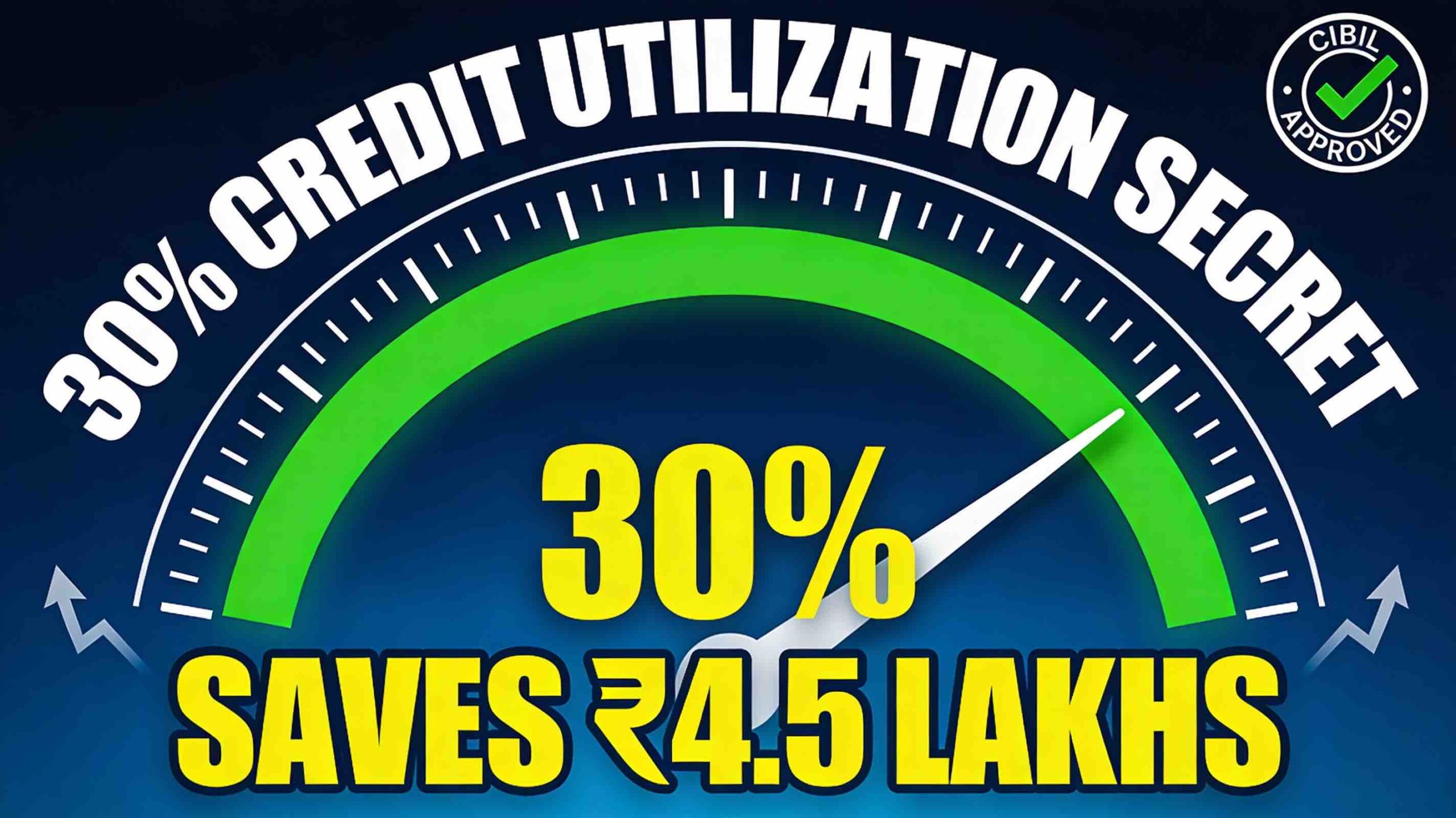
Now, why should this matter to you? Because your credit utilization ratio accounts for approximately 30% of your CIBIL score—making it the second most influential factor after payment history (which carries 35% weightage). That single metric controls nearly one-third of your creditworthiness in the eyes of lenders. Understanding this relationship is the foundation of credit score improvement.
The Magic of 30%: Why This Threshold Transforms Your Score
Financial experts and credit bureaus consistently recommend maintaining your credit utilization below 30%. But this isn’t arbitrary. There’s actual data backing this threshold.
According to credit scoring models, 30% is the critical point where the negative impact on your credit score becomes pronounced. When you exceed 30%, lenders start perceiving you as someone who relies heavily on credit, potentially indicating financial stress. But when you stay below 30%, you send a completely different signal: you’re someone who uses credit responsibly and isn’t financially stretched.
The science goes deeper. Studies show that individuals with the highest credit scores—those in the 750+ range—typically maintain credit utilization in the single digits (0-10%). This reveals an important truth: while 30% is the recommended ceiling, lower is always better. However, there’s an interesting twist many don’t know about: using 0% of your available credit is actually worse than using 1%.
Why? Because credit scoring algorithms need to see how you handle credit to evaluate your behavior. Zero utilization doesn’t provide any data points. By maintaining a small, consistent balance that you pay off monthly, you demonstrate active credit management while keeping utilization low—the ideal sweet spot.
How Credit Utilization Directly Impacts Your CIBIL Score
Understanding the math behind credit utilization’s impact helps you grasp why this factor is truly transformative:
| Utilization Range | Credit Score Impact | Lender Perception |
|---|---|---|
| 0-10% | Excellent | Financially responsible, strong management |
| 10-30% | Good | Healthy credit behavior, financially stable |
| 30-50% | Fair | Starting to show credit reliance |
| 50-75% | Poor | High reliance on credit, potential stress |
| 75-100% | Very Poor | Severe financial strain, high-risk borrower |
When your utilization climbs above 50%, lenders view it as a red flag. It signals that you might be living beyond your means or facing financial difficulty. In practical terms, if you’re consistently using over 50% of your credit limit, your CIBIL score could drop by 50-100 points compared to someone maintaining 30% utilization with identical payment history.
This is where the “secret” lies. Most people focus obsessively on paying bills on time (which matters, absolutely), but they ignore the credit utilization ratio. Meanwhile, someone else with perfect payment history but 80% credit utilization gets worse loan terms and higher interest rates. The forgotten factor determines your financial destiny.
The Real-World Impact: Why This Transforms Everything
Let me paint a practical scenario. Two individuals, Rahul and Priya, both have ₹5,00,000 in combined credit card limits. Both pay their bills on time. The difference?
Rahul’s Strategy: He uses ₹2,00,000 of his ₹5,00,000 available credit (40% utilization).
Priya’s Strategy: She uses ₹1,50,000 of her ₹5,00,000 available credit (30% utilization).
When both apply for a home loan:
- Rahul’s rate: 7.85% interest on ₹50,00,000 home loan = ₹392,500 per year in interest
- Priya’s rate: 7.40% interest on the same loan (0.45% lower due to better credit profile) = ₹370,000 per year in interest
Priya saves ₹22,500 annually—or ₹4,50,000 over a 20-year loan tenure. That’s the power of managing credit utilization below 30%. It’s not just about a better number; it’s about tangible financial benefits.
Actionable Strategies: How to Maintain 30% Utilization
Knowing the importance is one thing. Actually implementing it is another. Here are proven, practical strategies:
1. Request a Credit Limit Increase
This is the simplest lever to pull. By increasing your credit limit without increasing your spending, your utilization ratio automatically drops. If your limit goes from ₹50,000 to ₹1,00,000 and you maintain ₹25,000 spending, your utilization drops from 50% to 25%. Most banks offer limit increases after 6-12 months of responsible usage, or you can request one proactively.
2. Make Mid-Cycle Payments (The Statement Date Secret)
Here’s a tactic many miss: your bank reports your utilization based on your statement balance, not your current balance. By making a payment before your statement closing date, you reduce the reported balance. For example, if your statement closes on the 5th and you make a payment on the 3rd, that lower balance gets reported to credit bureaus. You can continue using the card afterward; what matters is the balance on statement date.
3. Spread Spending Across Multiple Cards
Instead of using one card to 40% utilization, distribute spending across three cards at 15% each. Credit bureaus evaluate both individual card utilization and overall utilization, so this strategy works doubly in your favor.
4. Avoid Closing Old Credit Cards
Closing cards actually hurts your credit utilization ratio because it reduces your total available credit. If you have three cards with ₹1,00,000 limits each (₹3,00,000 total) and close one, you’re now down to ₹2,00,000 available credit. Your utilization jumps instantly, even if your spending stays the same.
5. Set Spending Alerts
Most credit cards allow you to set balance alerts. Configure one at 25% of your limit to give yourself a buffer before hitting the 30% threshold. This simple habit creates automatic discipline.
Common Mistakes That Sabotage Your Credit Utilization
Mistake 1: Thinking one high-utilization month won’t matter
While occasional spikes don’t devastate your score, consistent high utilization does compound damage. Lenders use “trended data,” meaning they track your utilization patterns over months, not just a single snapshot.
Mistake 2: Closing paid-off cards to “clean up” your profile
Counterintuitively, closing cards makes your utilization worse. Keep them open with small, occasional charges.
Mistake 3: Maxing out cards to earn rewards
The marginal rewards aren’t worth the credit score damage. Disciplined utilization management yields far greater long-term financial benefits.
Your Next Steps: Transform Your Credit Profile Today
The path to better credit utilization isn’t complicated. Start here:
- Calculate your current ratio: Add up all your outstanding balances and divide by your total credit limits.
- If above 30%, take action immediately: Request a limit increase or pay down balances before your next statement date.
- Set up alerts: Configure balance notifications at 25% of your limit.
- Review monthly: Track your utilization alongside your payment schedule.
Remember, credit utilization isn’t a one-time fix—it’s an ongoing financial habit. But unlike salary increases or investment returns, you control it entirely. Within 30-45 days of maintaining utilization below 30%, you’ll likely see your credit score shift upward. Within 6 months, that improved score translates into tangible benefits: lower loan interest rates, higher credit approvals, better card offers.
The 30% rule isn’t a secret because it’s complex. It’s overlooked because it’s simple—and simplicity doesn’t grab headlines. But for those who implement it consistently, the transformation in financial opportunity is anything but ordinary. Your future self, looking back at a home loan approved at 0.5% lower interest, will thank you for understanding this overlooked factor today.
Quick Takeaway: Your credit utilization ratio, accounts for 30% of your CIBIL score. Keeping it below 30% signals financial responsibility to lenders, unlocks lower interest rates, and dramatically improves your chances of loan approval. Request higher credit limits, make mid-cycle payments before your statement date, and spread spending across multiple cards to master this critical but overlooked metric.
- Budget 2026 Predictions: Top 5 Expectations Likely to Become Reality
 Budget 2026 is around the corner! Discover our top 5 predictions—like tax relief hikes and railway boosts—that are most likely to happen. Get ahead with smart insights for your finances.
 - Budget 2026: Why Your Marriage Certificate Could Be Your Biggest Tax-Saving Tool This Year
 Budget 2026 eyes joint taxation for couples—pool incomes, slash taxes by 20-30%! Save lakhs with optional filing. Explore how it beats income tax slabs, boosts tax savings, and what it means for your family finances. Will FM approve? Read now!
 - Sunita Williams’ Secret: Astronaut Mindset That Builds Crores via SIP Investing
 Discover Sunita Williams’ astronaut mindset for wealth building: Solve crises “one bite at a time” like mutual fund SIP investing. Learn disciplined saving, risk pivots, and best mutual funds India strategies from her 27-year NASA career.
 - HDFC Bank Q3 Surprise: Profit Jumps 11.5% – Why Experts Call It a ‘Screaming Buy’ at ₹930
 HDFC Bank’s Q3 FY26 results shine: 11.5% profit surge to ₹18,653 Cr, GNPA at 1.24%, deposits up 11.5%. Beats estimates amid deposit wars—strong buy for 2026? Stock eyes ₹1,000 breakout.
 - Withdraw PF Money in Seconds? EPFO’s New UPI Update is the Game-Changer
 Discover EPFO UPI withdrawal: Instant PF access in minutes via PhonePe or Google Pay. Step-by-step guide, eligibility, benefits, and tax rules for 2026. Skip delays—empower your savings today!
 - The Truth Behind the “TCS Employee Salary Drop”: Viral News, Variable Pay and What It Means for You
 Discover the real reasons behind the viral TCS employee salary drop. From variable pay cuts to strict WFO mandates and performance bands, learn why IT take-home pay is shrinking and how to protect your earnings effectively.
 - This One No-Shop Weekend Hack Could Save You ₹50,000 Yearly—Here’s How
 Discover how one no-shop weekend monthly saves ₹50,000 yearly. Learn proven strategies to overcome impulse buying, build financial discipline, and transform weekend spending habits with our actionable no-spend challenge guide.
 - The ₹1 Magic: Transform Pocket Change Into ₹1,378 With This Simple 52-Week Plan
 Transform your finances with India’s most popular 52-week money challenge. Save just ₹1 in week one, building to ₹52 by year-end for a total of ₹1,378. Discover the reverse challenge, practical tips, and how consistent saving habits create lasting financial freedom.
 - Stop! Don’t “Liquidate” Your ₹500 Notes Yet: What the New RBI Circular Actually Says
 GOI debunks viral ₹500 note discontinuation rumor. Fake news claimed RBI would ban notes by March 2026. Official clarification: ₹500 notes remain legal tender, ATMs continue dispensing them. Learn how to spot fake currency news and verify financial information.
 - Cheques are Making a Huge Comeback in India—and They’re Now as Fast as UPI!
 India’s real-time cheque clearing system launched October 2025, processing cheques in hours instead of days. While Phase 2 was postponed, Phase 1 delivers same-day clearing with auto-approval features. Learn how continuous clearing speeds up banking for businesses and freelancers.