
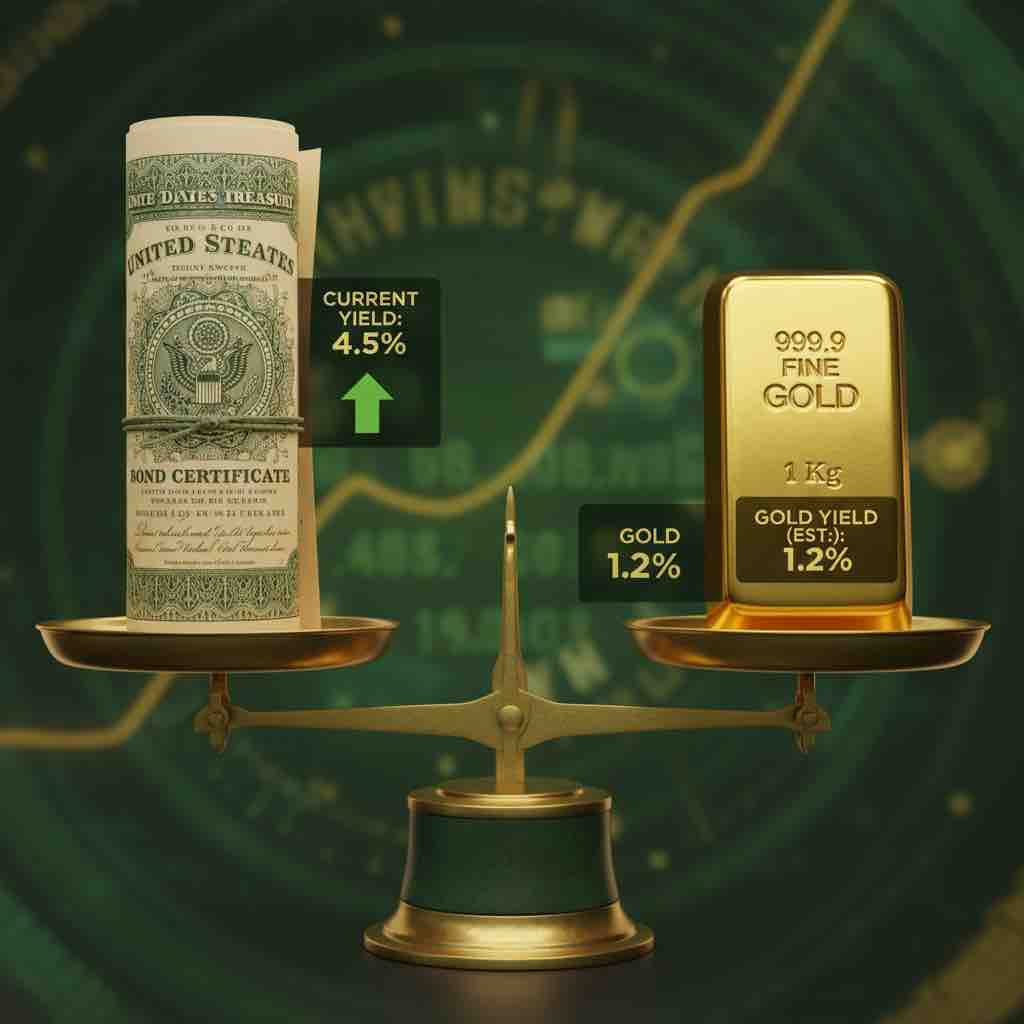
October 21, 2025, offered a masterclass in macroeconomic mechanics. As the US Dollar Index surged 0.7%, gold plummeted 6% the same day. For most retail investors, this simultaneous movement seemed counterintuitive. Why would a stronger dollar hurt gold? Shouldn’t safe assets move together? The answer lies in understanding one of the most fundamental relationships in global markets: the inverse correlation between dollar strength and gold prices. This relationship isn’t random—it’s economic law, and grasping it separates informed investors from reactive traders.
A Historical Dance Spanning Decades
The dollar-gold story didn’t begin in 2025. It stretches back to 1944, when the Bretton Woods Conference pegged the dollar to gold at $35 per ounce, effectively making the dollar “as good as gold” in international commerce. For nearly three decades, this arrangement held. Then came the 1970s.
When inflation erupted in the US, the dollar’s purchasing power collapsed. As the currency weakened, investors fled toward real assets—particularly gold. In 1980, gold reached an astonishing $850 per ounce, a level that wouldn’t be surpassed for decades. Why? Because dollar weakness made gold relatively cheap for international buyers and attractive as an inflation hedge. The relationship was clear: weak dollar, strong gold.
Fast forward to 2008. The financial crisis triggered simultaneous dollar strength (as investors sought safe-haven US Treasuries) and gold appreciation. Wait—that breaks the inverse rule, right? Not quite. Gold rallied because real interest rates plummeted into negative territory, making the non-yielding asset suddenly attractive. The dollar strengthened for different reasons—fear and safety, not economic strength. Context matters.
Today’s relationship remains remarkably consistent with historical patterns. When dollars are scarce (strong dollar), gold struggles. When dollars are abundant (weak dollar), gold thrives.
Why Does a Strong Dollar Hurt Gold?
The mechanics are deceptively simple, yet most investors miss them.
The Pricing Puzzle
Gold trades globally in US dollars. This seemingly mundane fact carries enormous consequences. When the dollar appreciates, international buyers face a double squeeze. First, gold becomes literally more expensive in their local currencies. A European investor facing a 5% dollar appreciation watches gold prices jump 5% in euros—without a single ounce changing hands. Second, the purchasing power advantage shifts. Why buy expensive gold when dollar-denominated assets like Treasury bills become relatively cheaper?
Imagine you’re an Indian investor. In October 2024, gold costs ₹55,000 per 10 grams. By October 2025, as the dollar strengthens, that same ounce costs ₹58,000. The rupee weakened, but gold’s fundamental value didn’t change. Yet to you, it’s 5% more expensive. Multiply this across millions of global buyers, and demand evaporates.
The Yield Trap
Here’s where most gold advocates miss the plot. Gold pays nothing. It generates zero interest, zero dividends, zero cash flow. When interest rates hover near zero, this doesn’t matter much. A 0% Treasury and a non-yielding gold bar look equally unattractive, so investors choose gold for its inflation protection.
But what happens when Treasury yields climb to 4.5% or 5%? Suddenly, the math shifts dramatically. Sitting on gold (0% return) versus buying Treasuries (4.5% guaranteed return) becomes an easy calculation. Interest rates rise because the Federal Reserve tightens policy—and dollar strength accompanies rate hikes. The causality flows: Fed hikes → rates rise → dollar strengthens → gold becomes less attractive relative to yielding alternatives.
October 2025 perfectly illustrated this. Better-than-expected US retail sales convinced markets the Fed wouldn’t cut rates soon. Treasury yields climbed. The dollar surged. Gold tumbled. It wasn’t coincidence—it was investors reallocating capital from non-yielding gold toward yield-bearing Treasuries.
Currency Confidence and Safe-Haven Flows
A strong dollar reflects confidence in US economic and political stability. When the world believes America is stable, safe, and growing, investors hold dollars. They don’t need gold as an alternative store of value. Conversely, when dollar confidence erodes—perhaps due to geopolitical instability or fiscal concerns—investors diversify into gold. This isn’t about gold becoming more valuable; it’s about the dollar losing appeal as the world’s preferred reserve currency.
Think of it like switching banks. When your primary bank is rock-solid, you keep deposits there. When rumors of instability emerge, you diversify elsewhere. Gold serves as that alternative bank for global capital.
Real Interest Rates: The Silent Kingmaker
Here’s where sophistication kicks in. Most people focus on nominal interest rates (what you see in headlines: “Fed raises rates to 4.5%”). But real interest rates—nominal rates minus inflation expectations—are what truly drive gold.
If inflation runs at 4% and Treasury yields are 5%, real rates are +1%. Positive real rates penalize gold because the opportunity cost of holding non-yielding assets increases. You’re giving up 1% purchasing power annually to own gold.
Flip the scenario: inflation at 6%, yields at 4%, real rates at -2%. Suddenly, holding gold makes sense. You’re actually gaining 2% in real purchasing power annually just by avoiding Treasuries—a screaming bargain.
During 2022’s rate-hiking cycle, the Fed aggressively raised rates while inflation remained sticky. Real rates climbed sharply from deeply negative to positive territory. Gold fell 10%. In 2024, as rate-hike expectations softened and sticky inflation persisted, real rates declined, and gold surged 25%. Same dollar, different story. Same gold, different circumstances. The relationship flows through real rates, not nominal ones.
The Federal Reserve’s Hidden Hand
Most investors blame the Fed for raising rates. Sophisticated traders recognize the Fed controls the dollar’s destiny.
Rate Hikes Create Dollar Demand
When the Federal Reserve raises interest rates, something magical happens: global capital floods into US assets seeking higher returns. A Japanese investor earning 0.5% in Tokyo suddenly finds 5% US Treasury yields irresistible. They exchange yen for dollars to buy Treasuries. Millions of similar transactions flood the currency markets. More demand for dollars pushes the dollar index higher.
This mechanism works relentlessly. During 2022-2023, as the Fed hiked rates from near-zero to 5.25%, the dollar index soared from 95 to 107—a 12% appreciation. Simultaneously, gold crashed from $1,800 to $1,600. The causality was mechanical: Fed hikes → higher yields → more dollar demand → stronger dollar → weaker gold.
Forward Guidance Moves Markets Instantly
Here’s what separates amateur traders from professionals: the Fed’s words move markets as much as actual rate decisions. When Jerome Powell hints at extended higher rates, traders immediately price in stronger dollars and weaker gold—even if rates don’t change for months.
Consider October 2025’s dynamics. Powell didn’t hike rates that week. He didn’t announce new policy. But his tone suggested the Fed would remain patient, keeping rates elevated longer than markets hoped. Traders interpreted this as “dollars will stay strong.” Gold sellers emerged preemptively. The dollar strengthened. Gold fell. Communication shaped markets before any actual policy change materialized.
This is why “Fed watch” dominates financial media. Every speech, every press conference, every written statement triggers instant recalibration across dollar and gold markets.
Quantitative Easing vs Tightening
When the Fed engages in Quantitative Easing (QE)—essentially printing money by buying bonds—two things happen. First, the money supply swells, weakening the dollar. Second, yields fall, reducing opportunity costs for gold. Both effects favor gold. During 2008-2011 and again 2020-2021, when the Fed deployed massive QE, gold surged.
Quantitative Tightening (QT) works oppositely. The Fed shrinks its balance sheet by allowing bonds to mature without replacement. Money supply contracts. The dollar strengthens. Gold suffers. This played out from 2018-2019 and again from 2022-2024, when gold fell despite persistent inflation—because QT strengthened the dollar more than inflation pressures supported gold.
Interest Rates: The Silent Killer of Gold Demand
Nominal Rates and the Simple Math
When 10-year Treasury yields sit at 4.5%, investors face a straightforward choice: buy Treasuries earning 4.5% annually or hold gold earning 0%. The math isn’t complicated. Most rational capital allocates toward Treasuries.
Expand this globally: a Swiss investor earning 3.5% in Swiss government bonds won’t buy gold yielding 0% unless expecting significant appreciation. A Canadian earning 3.25% in Canadian bonds has similar calculations. When rates worldwide rise, global capital abandons gold.
Real Interest Rates: The True Culprit
But here’s the plot twist that separates sophisticated analysis from surface-level thinking: nominal rates mislead. Real rates tell the truth.
Define real interest rates: nominal yields minus inflation expectations. When 10-year Treasuries yield 5% and inflation expectations stand at 4%, real rates are +1%. This means buying Treasuries nets you 1% gains above inflation. Gold, offering 0% nominal return, loses to Treasuries in real terms—unless you expect gold prices to appreciate beyond inflation.
Flip the script: 5% nominal yields with 6% expected inflation means -1% real rates. You’re losing purchasing power in Treasuries. Gold suddenly looks smarter because it historically preserves value during inflation.
October 2025 witnessed real rates around +1.5% (5% yields minus 3.5% inflation expectations). These positive real rates penalized gold. Investors could earn real returns in Treasuries, making zero-yield gold less attractive. Simple math, profound consequences.
The Mechanical Correlation
This isn’t theory—it’s observable fact. During 2022, real rates climbed from deeply negative to positive as the Fed hiked aggressively while inflation remained sticky. Gold fell 10%. During 2024, real rates declined as the Fed paused and inflation cooled. Gold surged 25%. The correlation between real rates and gold is among the tightest in financial markets.
If you want to predict gold’s direction, stop watching gold charts. Watch real interest rates. The relationship is mechanical, not emotional.
Interest Rates, Inflation Expectations, and the Currency Triangle
Three variables intertwine: dollar strength, inflation expectations, and interest rates. Understanding their dance unlocks gold market forecasting.
The Inflation-Dollar-Gold Triangle
High inflation expectations weaken the dollar (money loses purchasing power) but strengthen gold (inflation hedge). Conversely, low inflation expectations support the dollar but pressure gold. This creates a triangle where all three variables interact.
October 2025 presented a fascinating case: moderate inflation, rising rates, and strong dollar. Why? Because markets believed the Fed would crush remaining inflation through elevated rates. This belief strengthened the dollar and weakened gold simultaneously.
Breaking the Expected Pattern
Strong inflation and strong dollar rarely coexist—unless the market prices in aggressive Fed rate hikes. When this happens, investors expect the Fed to fight inflation successfully, supporting both the dollar (through confidence in Fed competence) and interest rates (through actual hikes). Gold suffers not because inflation is low, but because real rates are rising.
This paradox confuses many investors. They see inflation and expect gold to rally. Instead, gold falls because real rates spike higher faster than nominal inflation rises.
Long-Term vs Short-Term Expectations
Distinguish between near-term inflation—affecting gold immediately—and long-term inflation expectations—affecting dollar trajectory fundamentally. A temporary inflation spike from supply disruptions might spike gold for weeks while the dollar strengthens on Fed tightening expectations. The near-term and long-term point in different directions, creating confusion.
When inflation becomes expected as permanent and structural, the dollar weakens long-term and gold gains—but this takes time to materialize as market participants gradually repriced expectations.
When Will the Dollar Weaken and Gold Rally Again?
Crystal-ball gazing is dangerous, but observable patterns offer clues.
Recession Scenarios
Economic slowdowns typically trigger two-stage dollar weakness. First, the Fed cuts rates (lower yields reduce dollar attraction). Second, investors flee to safety, but “safety” shifts from dollars to broader diversification—including gold. The 2008 crisis initially strengthened the dollar but later weakened it as recession deepened and rate cuts materialized.
If US GDP growth slows sharply in 2026, expect classic recession dynamics: dollar weakness, gold strength.
The Fed Pivot
Should inflation cool to 2% and unemployment rise above 5%, the Fed will cut rates. Rate cuts weaken the dollar (lower yields reduce capital inflows) and strengthen gold (lower opportunity costs). This scenario could materialize in 2026 if economic data deteriorates.
Conversely, if inflation re-accelerates and the Fed maintains elevated rates, the dollar remains strong and gold stays pressured.
Geopolitical Realignment
International conflicts or US political instability could trigger capital flight from dollars toward gold and other alternatives. While unpredictable, such events would weaken the dollar and boost gold prices regardless of economic fundamentals.
Central Bank Diversification
The slow-motion shift away from dollar reserves—with central banks accumulating gold instead—gradually pressures the dollar and supports gold. This structural trend, already underway, will intensify gold’s floor regardless of short-term rate dynamics.
Conclusion: Investing Smarter Through Understanding
Most investors focus narrowly: “Is gold cheap?” “Are rates high?” “Is inflation bad?” Sophisticated investors ask broader questions: “How do these variables interact?” “What’s the Fed’s likely path?” “How will that affect the dollar?” “What does that mean for gold?”
The dollar-gold inverse relationship isn’t mystical. It flows from observable economics: pricing in foreign currency, yield comparisons, real interest rates, and safe-haven dynamics. Understanding these mechanics—not just observing the correlation—separates traders who make money from those who guess.
If you believe the Federal Reserve will cut rates significantly in 2026, gold presents compelling opportunity today. The dollar will likely weaken as rates fall, and gold will appreciate as real rates decline. Conversely, if you expect rates to remain elevated through 2026, caution is warranted—the dollar stays strong and gold faces headwinds.
Here’s the practical takeaway: monitor the 10-year Treasury yield and the dollar index religiously. These two indicators often predict gold’s next move weeks or months in advance. When real rates (yields minus inflation expectations) turn decisively negative, gold typically rallies. When real rates spike positive, gold typically struggles.
No asset increases in value consistently without fluctuations. Volatility is inherent. But understanding the mechanisms driving that volatility transforms you from a reactive investor hoping for the best into a strategic participant positioning yourself ahead of moves. That’s the power of understanding the dollar-gold relationship. Use it wisely.
- Sunita Williams’ Secret: Astronaut Mindset That Builds Crores via SIP Investing
 Discover Sunita Williams’ astronaut mindset for wealth building: Solve crises “one bite at a time” like mutual fund SIP investing. Learn disciplined saving, risk pivots, and best mutual funds India strategies from her 27-year NASA career.
 - The ₹1 Magic: Transform Pocket Change Into ₹1,378 With This Simple 52-Week Plan
 Transform your finances with India’s most popular 52-week money challenge. Save just ₹1 in week one, building to ₹52 by year-end for a total of ₹1,378. Discover the reverse challenge, practical tips, and how consistent saving habits create lasting financial freedom.
 - Forget 10% Salaries: Why 48% of India’s Gen Z are Starting SIPs with Just ₹500
 Discover how India’s Gen Z is building wealth with just ₹500 monthly SIPs. From ₹3 trillion in SIP inflows to 100 million active accounts, young investors are leveraging compound interest and disciplined investing to achieve financial independence without hefty salaries or trust funds.
 - Is Your Credit Card Quietly Killing Your Score? The 30% Factor Lenders Watch Closely
 Credit utilization ratio can quietly make or break your CIBIL score. Keeping card usage below 30% signals control, not desperation. With simple moves—mid‑cycle payments, spreading spends, and requesting higher limits—you can boost approval odds and pay less interest overall today.
 - Need a Loan? Use These 7 No-Gimmick Tactics to Fix Your CIBIL Score in Just 30 Days
 Boost your CIBIL score by 50+ points in just 30 days with proven tactics. Master payment history, reduce credit utilization, and dispute errors to unlock better loan approvals and lower interest rates. No gimmicks—just real strategies that work.
 - You’re Sitting on a Goldmine: How Your UPI History Can Help You Build Wealth
 Your UPI transaction history holds the key to financial freedom. Discover how to leverage daily payment data for expense tracking, budget optimization, and wealth creation. Transform invisible spending into actionable insights and take control of your financial future today.
 - Paying Multiple EMIs? This One Move Could Save You Up to ₹4 Lakhs in Interest
 Drowning in multiple EMIs? Discover how debt consolidation strategy can transform your finances by merging several loans into one smart EMI plan. Learn proven techniques to reduce interest costs, simplify payments, and regain financial control as an Indian urban professional.
 - This One Switch Could Save You ₹57 Lakhs by 2026: Robo-Advisors vs. Human Experts
 Robo-advisors like Groww, Upstox, and Kuvera offer algorithm-driven, transparent, low-cost investing for millennials and Gen Z. Compare features, fees, and benefits against traditional human advisors. Discover which approach—or hybrid model—suits your financial goals best in 2025.
 - Is Your Portfolio Missing Out? The ‘Green’ Strategy That’s Quietly Outperforming the Market
 Discover how to align your investment portfolio with your values through ESG and sustainable investing. Learn about sustainable mutual funds, thematic ETFs, and impact investing strategies perfect for Gen Z investors seeking competitive returns while supporting environmental and social change.
 - Beyond the Paycheck: How India’s New Workforce is Turning Side Gigs Into Wealth Engines
 Over 60% of Gen Z in India freelance for financial independence. Master income tracking, GST registration, tax deductions, and retirement planning without employer benefits. Learn Section 44ADA presumptive taxation, advance tax strategies, and insurance essentials for gig economy success.
Can you be more specific about the content of your article? After reading it, I still have some doubts. Hope you can help me.