
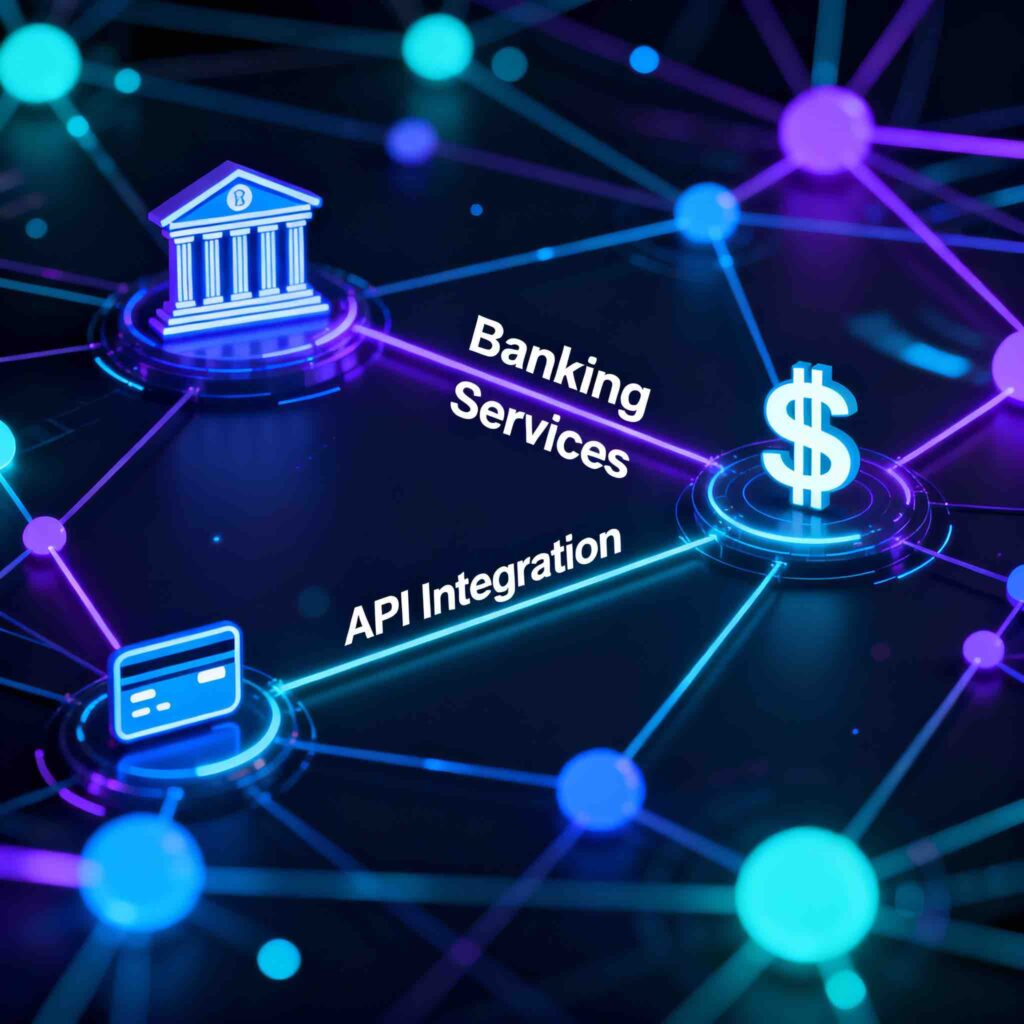
Open Banking and API ecosystems are revolutionising the banking landscape, making financial services more accessible, personalised and efficient. This blog explores these concepts in a clear, easy-to-understand way and highlights practical use cases, showing why they are vital for today’s digital banking future.
What is Open Banking?
Open Banking is a system where banks securely share customer data with third-party providers (TPPs) through Application Programming Interfaces (APIs). This data sharing is done with customers’ consent and under strict regulations aimed at enhancing competition and innovation in financial services.
Instead of banks holding exclusive control over customer data and financial services, Open Banking encourages collaboration. It allows customers to use a wider range of apps and services that interact with their bank accounts, providing more tailored and integrated financial solutions.
Understanding API Ecosystems in Banking
APIs act as bridges that connect different software systems. In banking, APIs enable seamless data exchange between banks and authorized third parties.
An API ecosystem refers to the interconnected environment where multiple APIs from various banking and fintech players coexist, enabling services like payments, account aggregation, loan processing, and more within a unified ecosystem. This ecosystem promotes innovation by allowing developers to create new applications rapidly, leveraging existing banking infrastructure.
Why Open Banking Matters
Open Banking is reshaping how consumers and businesses interact with financial services. Here’s why it’s important:
- Enhanced Customer Experience: Customers get personalized offerings, such as budgeting tools, personalized loan offers, or investment advice, based on their bank data.
- Increased Competition: Fintech companies can compete with traditional banks, fostering innovation and better rate offerings.
- Convenience: Through Open Banking, customers can manage multiple financial accounts in one place via account aggregation apps.
- Security: APIs operate under strict security standards and regulations, ensuring customer data safety.
Practical Use Cases of Open Banking and API Ecosystems
1. Account Aggregation
Apps aggregate data from multiple bank accounts and financial institutions to offer consolidated views of finances. For example, a personal finance app can show all bank balances, credit cards, investments, and expenses in one dashboard. This helps customers track their money efficiently without logging into multiple accounts.
2. Payment Initiation Services (PIS)
Open Banking APIs enable third-party apps to initiate payments directly from a customer’s bank account with their consent, bypassing traditional card networks. This can reduce transaction costs and increase payment speed. It benefits e-commerce platforms and bill payment apps, offering seamless and secure payment experiences.
3. Personalized Financial Products
Banks and fintech can use data access from Open Banking APIs to offer tailored financial advice, loans, or insurance plans. For example, lenders can analyze customer transaction history to provide customized loan offers or credit lines better suited to individual needs.
4. Improved Credit Scoring
With access to real-time bank data via APIs, lenders can create more accurate and fair credit scores, especially for customers who don’t have traditional credit histories. This opens financial inclusion opportunities for underserved groups.
5. Enhanced Fraud Detection
API ecosystems allow continuous monitoring of transactions and account activities through AI-powered tools integrated by third parties. This leads to real-time fraud detection, improving security for customers and banks alike.
How Open Banking Works: Step-by-Step
- Customer Consent: The user authorizes a third-party provider to access their banking data.
- API Request: The third party sends a secure API request to the bank.
- Data Sharing: The bank verifies the request and shares the permitted data or initiates the requested service.
- Service Delivery: The third-party application uses the data to provide personalized services to the customer securely.
- Control and Revocation: The customer can revoke consent anytime, regaining control over their data.
Regulatory Framework Supporting Open Banking
Countries are adopting regulatory frameworks to mandate Open Banking and ensure security. For example:
- The European Union has PSD2 (Payment Services Directive 2), which compels banks to open their APIs.
- In India, the RBI along with the NPCI are driving the implementation of Open Banking standards through the Account Aggregator framework.
- Other countries like the UK, Australia, and Canada also have robust Open Banking regulations.
These frameworks emphasize customer consent, data privacy, and strong security measures.
Challenges in Open Banking Adoption
While promising, Open Banking faces some challenges:
- Data Privacy Concerns: Customers need assurance about how their data is used and protected.
- Technical Complexity: Developing interoperable, secure APIs requires significant investment and expertise.
- Consumer Awareness: Many customers are still unaware of Open Banking benefits.
- Trust Issues: Customers need to trust third-party apps accessing their financial data.
Banks and fintechs need to continuously educate users and prioritize transparency and security.
Conclusion
Open Banking and API ecosystems are key drivers in transforming traditional banking into a more open, collaborative, and customer-centric industry. By enabling secure, authorized access to banking data, these innovations create opportunities for personalized products, improved financial management, and enhanced security.
- Cheques are Making a Huge Comeback in India—and They’re Now as Fast as UPI!
 India’s real-time cheque clearing system launched October 2025, processing cheques in hours instead of days. While Phase 2 was postponed, Phase 1 delivers same-day clearing with auto-approval features. Learn how continuous clearing speeds up banking for businesses and freelancers.
 - You’re Already Using It: The Hidden ‘Embedded Finance’ Revolution Taking Over India in 2026
 India’s embedded finance market is exploding in 2026. Learn how UPI evolved into digital assets, BNPL transformed shopping, and financial services seamlessly integrated into your favorite apps. Discover five major trends reshaping how regular Indians manage money today.
 - Need a Loan? Use These 7 No-Gimmick Tactics to Fix Your CIBIL Score in Just 30 Days
 Boost your CIBIL score by 50+ points in just 30 days with proven tactics. Master payment history, reduce credit utilization, and dispute errors to unlock better loan approvals and lower interest rates. No gimmicks—just real strategies that work.
 - Why Your Old Chequebook Might Stop Working: Understanding India’s Bold Bank Consolidation
 Explore India’s ambitious PSU bank consolidation strategy reshaping the financial sector. Understand recent mergers, the government’s FY27 mega plan, and how bank consolidation impacts customers, employees, and the broader banking ecosystem.
 - Union Bank, BOI, and IOB: The Next Mega-Merger Wave is Coming. Here’s How Your Savings & Account Details Will Change
 India’s public sector banking faces a transformative merger wave. Finance Minister Sitharaman confirmed talks with RBI on consolidating 12 banks into six to seven globally competitive institutions. Expected announcements in April-May 2026 will reshape banking operations, employee roles, and customer services fundamentally.
Your article helped me a lot, is there any more related content? Thanks!
Glad to hear from you! Please keep encouraging with your wonderful feedbacks and share it with your friends and family.
Your article helped me a lot, is there any more related content? Thanks!