
Banking is everywhere—helping you stash your allowance, send cash to a friend, get a student loan or even buy a home one day. But have you ever stopped to wonder: What is a bank? How did they begin and how do they really work? Let’s unlock the fascinating world of banking and make sense of it all without jargon or math headaches!
The Birth of Banking: How Did It All Start?
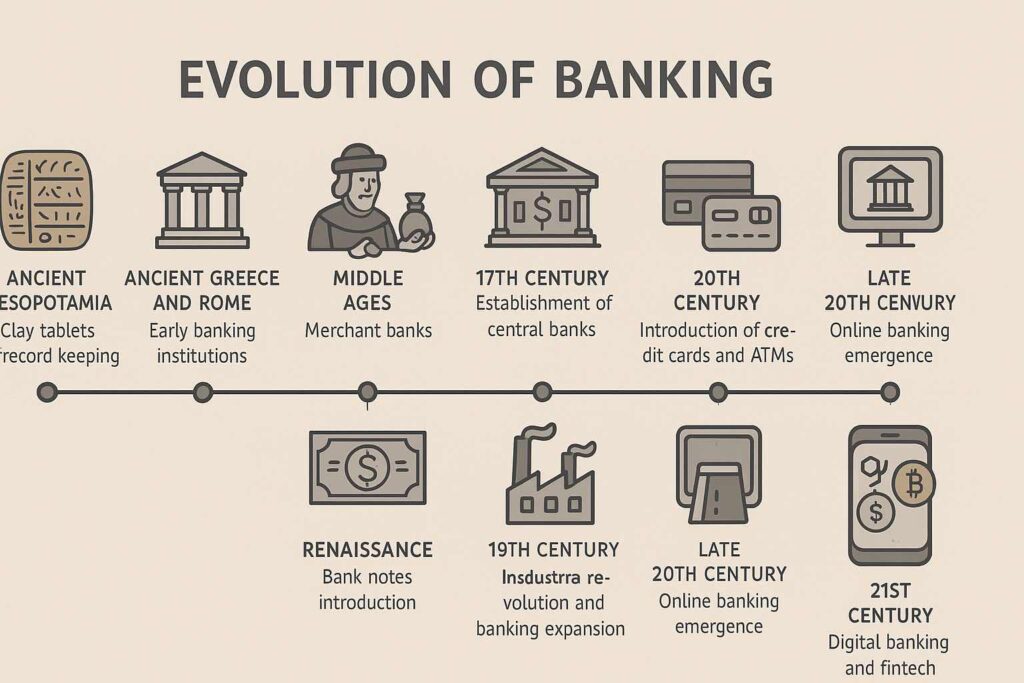
Did you know banks are older than the calculator, the compass and even the wheelbarrow? The history of banking stretches back thousands of years:
Ancient Times:
- Ancient temples in Mesopotamia, Egypt and India kept grain, gold and valuables safe. Priests and temple workers looked after people’s deposits, making temples the world’s first “banks”.
- Moneylending and currency exchange were common in ancient Greece and Rome. Merchants and moneylenders would accept deposits, lend to traders and monarchs and help with big purchases. Some even issued early versions of banknotes!
Medieval and Renaissance Europe:
- After the fall of Rome, banking paused then re-emerged in medieval Europe. The Knights Templar helped pilgrims send money across countries act as early bankers.
- The Medici family in 14th-century Italy set up one of the first bank with secret codes and ledgers—the “software” (on paper!) of their day.
Modern Beginnings:
- The Bank of Amsterdam (1609) and the Bank of England (1694) made banking official business. Safe deposits, lending and the first banknotes became standard.
In India, the oldest banks—like Bank of Hindustan (1771) and Allahabad Bank (1865)—paved the way for today’s banking giants.
The Core of Banking: What Do Banks Actually Do?
At its heart, a bank does two main things:
- Stores Money Safely: You can deposit your money and know it’s protected.
- Lends Money: The bank takes part of those deposited funds and lends them to people who want to buy things, start businesses or go to college.
But the story doesn’t stop there! Modern banks do much more:
- Move money around quickly and safely (think online transfers & UPI)
- Help people save money for dreams big and small
- Offer investment options and advice
- Make buying a car, a house or even your next smartphone—possible with loans
Banks are the gears behind a working economy helping money flow where it’s needed most.
Types of Bank Accounts: Where Should You Keep Your Money?
Not all accounts are made the same. Here’s the lowdown on the most popular types:
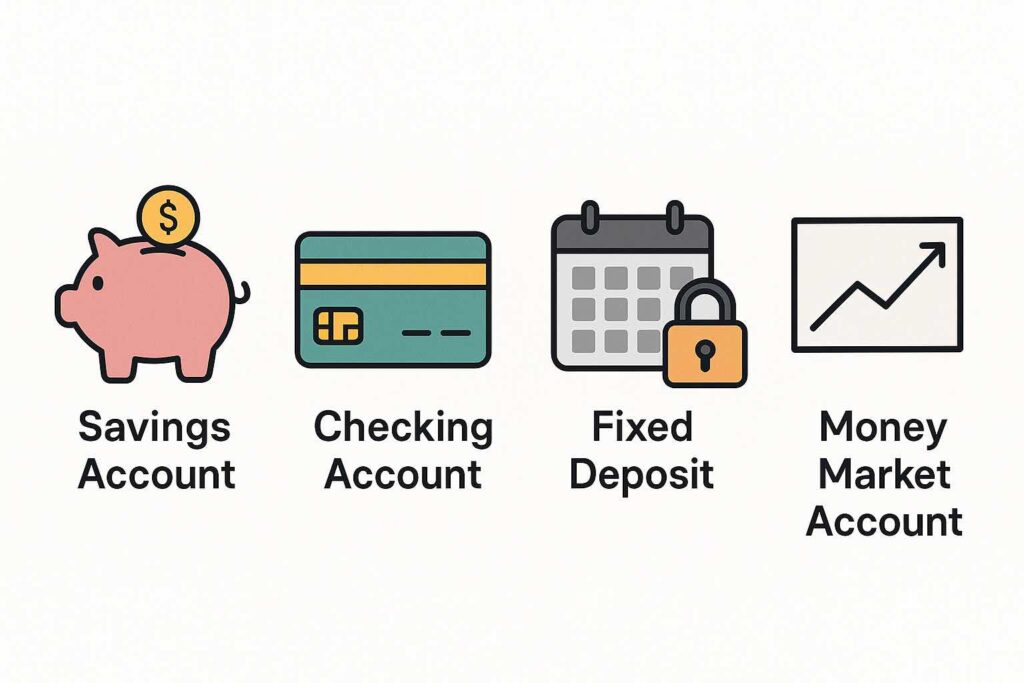
- Savings Account:
Your “money safe” at the bank. You earn a little interest while your funds stay accessible. Great for building a rainy-day fund or saving for a goal. - Current (Checking) Account:
Perfect if you need to pay bills, withdraw cash or make frequent transactions. Usually comes with a debit card and cheque book. - Fixed Deposit (FD)/Term Deposit:
Park your money for a set period and earn higher interest, but you can’t withdraw without a penalty. - Recurring Deposit:
Deposit a fixed amount every month for a certain period. At maturity, you get your money plus interest a favorite for disciplined savers.
Did you know?
Some banks also offer student accounts with low fees and cool perks!
Types of Loans: Borrowing Made Easy
Ever needed more money than you have? That’s where loans come in. Banks offer many types of loan:
- Personal Loan:
Use it for anything—from paying medical bills to upgrading your phone. No collateral required, but interest rates can be high. - Education Loan:
Dreaming of college? Education loans cover fees, books and sometimes living expenses. Repayment begins after your course finishes. - Home Loan/Mortgage:
Want to buy a house? This long-term loan has lower rates, but your home is used as collateral. - Auto Loan:
For wheels—new or used cars, two-wheelers, etc. The vehicle serves as security until you repay. - Business Loan:
To start, expand or revamp a business. Options and requirements vary widely.
Every loan comes with a catch: you must repay the borrowed amount plus interest.
The Magic of Modern Banking: Your Bank in Your Pocket
Forget waiting in line! Today, banks travel with you—on your phone:
- Online Banking:
Check your balance, transfer funds, pay bills and view your statement anytime, anywhere. - Mobile Banking Apps:
Deposit checks by taking a photo, block or unlock cards instantly or set spending limits for your account with a tap. - ATMs and Smart Teller Machines:
Cash withdrawals, deposits and even mini-statements—24/7, everywhere. - Contactless Payments:
Pay without swiping—just tap your card or phone. - Robo-Advisors & Chatbots:
Get automated advice and instant answers to banking questions via intelligent bots.
Security First!
Modern banks use encryption, biometrics (like face/fingerprint ID) and two-factor authentication to keep your money safe. But remember—never share your PIN or online banking passwords.
How Do Banks Earn Money?
This is where banking gets clever:
- Interest on Loans: Banks pay you a small interest to keep your money, but charge higher interest rates on the loans they give out. The difference is their main profit (called “net interest margin”). For example, they might pay 3% on your savings but charge 10% on a personal loan; the difference of 7% is the net interest margin earned by the banks.
- Fees: From ATM fees to account maintenance and late payment fees—these small charges add up!
- Investments: Banks invest in government bonds, the stock market and even real estate using their surplus funds.
In short: Banks are intermediaries, moving money from people who have it (savers) to those who need it (borrowers) while making a tidy profit on the way. Digital banks, with fewer overhead costs, might offer higher interest and fewer fees.
The Heartbeat of a Bank: Core Functions
Let’s break down the “core” of banking—what makes a bank, well, a bank!
- Accepting Deposits:
The first and most essential job—keeping your money safe, whether in a savings, current or fixed deposit account. - Lending Loans:
Helping individuals, businesses and even governments access funds for their needs. - Payment Services:
Everything from UPI and NEFT transfers to checks, cards and mobile payments. - Wealth & Investment Advisory:
Assisting customers in growing their money wisely. - Customer Account Management:
Keeping your records up to date, calculating interest and ensuring your funds are only accessible by you. - Regulatory Compliance:
Making sure all banking practices are safe, legal and follow government rules.
Banking Through the Ages: Why It Matters Today
Banking’s journey from grain deposits in ancient temples to a full-service digital ecosystem is nothing short of epic. Why does this matter?
- Economic Growth:
Banks help businesses start, families buy homes and governments fund projects. No banks, no progress! - Financial Inclusion:
Thanks to digital banking, more people than ever can open accounts, save and borrow money even from remote villages. - Security and Trust:
Advanced security measures and strong government regulation mean your money is safer than under your mattress.
Simple Tips for Banking Like a Pro
- Start early: Open a savings account and build the habit of saving regularly.
- Read the fine print: Always understand the terms before taking a loan or opening a new account.
- Leverage digital tools: Use mobile apps for managing expenses, setting reminders and getting transaction alerts.
- Protect your info: Don’t share your PIN or passwords with anyone—not even “bank employees.”
Key Banking Terms You Should Know
- Principal: The amount you originally deposit or borrow.
- Interest: What you earn on savings or pay on loans.
- Collateral: Something valuable you pledge for a secured loan.
- Overdraft: Spending more than you have in your account. Beware—fees apply!
- Net Banking: Banking done through the internet.
- NEFT/IMPS/UPI: Different types of electronic payments in India.
Conclusion: Banking for Everyone
Banking is not just about stashing cash; it’s about making your money work for you and helping build a strong community and country. Whether you’re a student, a young professional, or a curious mind, knowing your “banking basics” will help you manage money wisely and confidently tackle the financial world ahead.
- Cheques are Making a Huge Comeback in India—and They’re Now as Fast as UPI!
 India’s real-time cheque clearing system launched October 2025, processing cheques in hours instead of days. While Phase 2 was postponed, Phase 1 delivers same-day clearing with auto-approval features. Learn how continuous clearing speeds up banking for businesses and freelancers.
 - You’re Already Using It: The Hidden ‘Embedded Finance’ Revolution Taking Over India in 2026
 India’s embedded finance market is exploding in 2026. Learn how UPI evolved into digital assets, BNPL transformed shopping, and financial services seamlessly integrated into your favorite apps. Discover five major trends reshaping how regular Indians manage money today.
 - Is Your Credit Card Quietly Killing Your Score? The 30% Factor Lenders Watch Closely
 Credit utilization ratio can quietly make or break your CIBIL score. Keeping card usage below 30% signals control, not desperation. With simple moves—mid‑cycle payments, spreading spends, and requesting higher limits—you can boost approval odds and pay less interest overall today.
 - Need a Loan? Use These 7 No-Gimmick Tactics to Fix Your CIBIL Score in Just 30 Days
 Boost your CIBIL score by 50+ points in just 30 days with proven tactics. Master payment history, reduce credit utilization, and dispute errors to unlock better loan approvals and lower interest rates. No gimmicks—just real strategies that work.
 - Why Your Old Chequebook Might Stop Working: Understanding India’s Bold Bank Consolidation
 Explore India’s ambitious PSU bank consolidation strategy reshaping the financial sector. Understand recent mergers, the government’s FY27 mega plan, and how bank consolidation impacts customers, employees, and the broader banking ecosystem.
Thank you for your sharing. I am worried that I lack creative ideas. It is your article that makes me full of hope. Thank you. But, I have a question, can you help me?
Fena değil.
diyarbakır escort bakarken gördüm.
İşe yaradı.
Alsso visit my blog :: Daha fazla bilgi
Güzel yazı.
diyarbakır escort
bayan bakarken gördüm.
İşe yaradı.
İyipaylaşım.
Van escort bakarken gördüm.
Faydalı.
My web site: escort Hizmeti
Fena değil.
diyarbakır escort bbayan bbakarken gördüm.
İşe yaradı.
My web page … escort diyarbakıR
İyi paylaşım.
diyarbakır escort bakarken gördüm.
İşe yaradı.
Also visit my web-site :: gecelik escort diyarbakır
Fena değil.
diyarbakır escort bayan bakarken gördüm.
İşe yaradı.
Also visit my web site diyarbakır öğrenci escort
I have read so many content concerning the blogger lovers however this
post is really a pleasant post, keep it up.
Wow that was strange. I just wrote an very long comment but after I clicked submit
my comment didn’t appear. Grrrr… well I’m not writing all
that over again. Anyways, just wanted to say superb blog!
Sorry for the inconvenience, will keep improving it.
I don’t think the title of your article matches the content lol. Just kidding, mainly because I had some doubts after reading the article.
Pingback: ₹500 Note Ban Rumor Debunked: GOI Clarifies Currency Status