

The Indian banking landscape witnessed a significant transformation on October 4, 2025, when the Reserve Bank of India rolled out its ambitious continuous cheque clearing system. What was designed to revolutionize cheque processing by reducing settlement times from days to mere hours has instead become a story of technological turbulence, operational hurdles, and customer frustration. As banks struggle to adapt to this new reality, understanding the challenges and exploring viable solutions has become crucial for all stakeholders—from the RBI and NPCI to banks and everyday customers.
What is Continuous Cheque Clearing?
Before diving into the challenges, let’s understand what continuous cheque clearing actually means. Unlike the traditional batch-based Cheque Truncation System (CTS) that processed cheques once or twice daily, the new system operates continuously throughout banking hours—from 10:00 AM to 4:00 PM. Cheques are scanned, digitized, and transmitted to clearing houses in real-time rather than in bulk batches.
The RBI implemented this transformation in two phases. Phase 1, which began on October 4, 2025, requires banks to confirm or reject cheques by 7:00 PM on the same day. Phase 2, scheduled for January 3, 2026, introduces an even more stringent “T+3 hour” window—meaning banks must process cheques within just three hours of receipt. Any cheque not confirmed within this timeframe is automatically deemed approved and settled.
The promise was compelling: same-day cheque clearing, faster fund realization, reduced settlement risk, and uniformity across India’s banking network. However, the reality has been far more complicated.
The Challenges That Derailed Implementation
1. Technical Integration Glitches
The most significant challenge has been technical integration at both the central NPCI system and individual bank levels. During the initial rollout, the NPCI acknowledged encountering “teething issues” that disrupted the central clearing system. Banks reported software incompatibilities, system crashes, and connectivity problems that prevented seamless cheque image transmission.
For customers like Seema P. Wadhwa, a business proprietor, the consequences were immediate and severe. “None of my cheques deposited on and after October 3 have been cleared. Amounts have been debited from the payers’ accounts but not credited to my account,” she reported. This mismatched debit-credit scenario—where money disappears from one account but fails to appear in another—has created panic and eroded customer confidence.
2. Poor Image Quality and Scanning Errors
A critical bottleneck emerged from something seemingly simple: cheque image quality. Banks rushed to scan and transmit cheques continuously, but this haste led to blurred images, incomplete captures, and unreadable MICR codes. When scanning equipment produces poor-quality images, the automated verification systems cannot process them, forcing manual intervention and defeating the entire purpose of continuous clearing.
As one Mumbai-based private bank official explained, “There have been issues with system integration, readability and punching, so certain quotes and numbers don’t get scanned or can’t be read by systems. When clearing does not happen, someone physically has to go through those checks and do the process again. This has delayed cheque clearing”.
3. Inadequate Staff Training
Perhaps the most human element in this technological transition has been the lack of adequate staff training. Bank employees across branches—particularly in non-metro and rural areas—were unprepared for the continuous processing demands. The shift from batch processing to real-time scanning requires different workflows, faster decision-making, and immediate error resolution.
The Maharashtra State Bank Employees Federation (MSBEF) raised serious concerns about operational preparedness in their communication to the RBI. “The new system appears to have been introduced without sufficient operational preparedness. Bank staff are encountering major challenges, including software issues and inadequate training, leading to extended work hours and weekend shifts”.
A PSU bank official acknowledged, “The problem is more acute in non-metro branches where the staff are yet to get accustomed to the new process”.
4. Delayed Return Clearing Sessions
The Gujarat Urban Cooperative Banks Federation (GUCBF) highlighted another critical issue: unprecedented delays in return clearing. According to RBI’s circular, the Special Clearing Return Session on October 3 was scheduled between 5:00 PM and 8:00 PM, but member Urban Cooperative Banks received return clearing files only at 10:20 PM. Similarly, return clearing for October 4 arrived at 11:30 PM on October 5—nearly 28 hours late.
These delays have been particularly damaging for cooperative banks and smaller financial institutions that lack the technological infrastructure and personnel to handle extended processing hours.
5. Transaction Reconciliation Nightmares
Banks are struggling with transaction reconciliation under the new system. The continuous flow of cheques, combined with technical glitches and poor image quality, has created situations where banks cannot accurately match debits and credits. This has increased the risk of financial losses and created compliance headaches.
The timing of the rollout—just before the Diwali festive season when cheque volumes typically surge—has compounded these reconciliation challenges.
Real-World Impact: A Practical Example
Consider this scenario: Rajesh, a small business owner in Panaji, Goa, deposited a cheque for ₹2.5 lakh from a client on October 4, expecting same-day clearing. However, due to poor scanning at his branch, the cheque image was rejected by the clearing system. By the time the bank identified the issue and requested a fresh scan, it was past the 4:00 PM presentation window.
The cheque had to be reprocessed the next day, but technical glitches at the NPCI level caused another delay. Meanwhile, the payer’s account was debited on October 5, but Rajesh’s account showed no credit. After multiple branch visits and six days of waiting—far worse than the previous T+1 clearing cycle—the amount finally appeared in his account.
This experience, shared by customers across India, demonstrates how implementation challenges have paradoxically made cheque clearing slower rather than faster.
Impact on Different Stakeholders
For Customers: The primary victims have been account holders and businesses that rely on cheque payments. Many employees haven’t received salaries on time, disrupting festive purchases during Diwali. Business owners face cash flow problems when cheques remain uncleared for days. The credibility gap—where banks promised same-day clearing but delivered week-long delays—has severely damaged trust.
For Banks: Banks face extended work hours, weekend shifts, customer complaints, reconciliation challenges, and potential financial losses from mismatched transactions. The reputational damage from failed implementation is significant, especially for cooperative and smaller banks with limited resources.
For NPCI: As the central clearing agency, NPCI bears responsibility for system stability and has been working overtime to resolve technical issues. The corporation processed 14.9 million instruments worth ₹8.49 lakh crore since the rollout, demonstrating the system’s scale and complexity.
For RBI: The central bank’s ambitious modernization initiative has faced public scrutiny. While the intent is commendable, the execution reveals gaps in pilot testing, phased rollout planning, and stakeholder readiness assessment.
The Way Forward: Solutions and Recommendations
Despite the rocky start, continuous cheque clearing remains a necessary evolution for India’s payment infrastructure. Here are practical solutions to address the current challenges:
1. Comprehensive Staff Training Programs
Banks must invest urgently in training programs that cover:
- Real-time scanning techniques to ensure image quality
- Continuous processing workflows versus batch processing
- Error identification and immediate resolution procedures
- System troubleshooting and escalation protocols
Training should be role-specific, with hands-on practice sessions and regular refreshers. Non-metro and rural branch staff should receive priority attention.
2. Technology Infrastructure Upgrades
Banks need to upgrade their technological capabilities:
- High-resolution scanning equipment to capture clear cheque images
- Robust software systems that can handle continuous processing loads
- Better integration between branch systems and central clearing platforms
- Backup systems and redundancy to prevent complete failures during technical glitches
The NPCI should also strengthen its centralized clearing house infrastructure to handle peak loads without crashes.
3. Extended Transition Period
Several bank unions have requested RBI to defer full implementation until systems stabilize. A pragmatic approach would be:
- Extend Phase 1 beyond January 2, 2026, until technical issues are fully resolved
- Conduct more extensive pilot testing before launching Phase 2’s T+3 hour window
- Implement the system in waves—starting with metro branches before expanding to tier-2 and tier-3 cities
- Avoid major rollouts during festive seasons when transaction volumes peak
4. Mandatory Positive Pay System
To reduce fraud and ensure accuracy, banks should mandate the Positive Pay System (PPS) for all high-value cheques. Under PPS, customers electronically submit cheque details—including payee name, amount, date, and cheque number—before issuing the cheque. When the cheque is presented for clearing, banks cross-verify these details, significantly reducing fraud and processing errors.
Currently, PPS is voluntary for cheques between ₹50,000 and ₹5 lakh but mandatory for amounts above ₹5 lakh. Extending this requirement to lower denominations would improve accuracy and customer confidence.
5. Promote Digital Payment Alternatives
While fixing cheque clearing is important, banks should actively encourage customers to adopt digital alternatives for routine transactions:
- UPI (Unified Payments Interface): Instant, 24/7 transfers with no charges, ideal for amounts up to ₹1 lakh
- NEFT (National Electronic Funds Transfer): Suitable for scheduled, large-value transfers with no upper limit
- RTGS (Real Time Gross Settlement): For immediate large-value transfers above ₹2 lakh
- IMPS (Immediate Payment Service): Real-time transfers available round-the-clock
Comparison of UPI and NEFT payment systems highlighting key features and differences
Many banks have already advised customers to use these digital channels during the transition period. This pragmatic approach reduces pressure on the cheque clearing system while ensuring customers can complete urgent transactions.
6. Enhanced Customer Communication
Banks must improve transparency through:
- Real-time SMS/app notifications about cheque status at each stage
- Clear communication about expected clearing timelines
- Dedicated helplines for cheque clearing queries
- Proactive alerts when cheques are delayed or rejected
- Compensation mechanisms for delays beyond promised timelines
7. Reconciliation and Audit Mechanisms
Banks should implement:
- Automated reconciliation systems that flag mismatched debits and credits immediately
- Daily audit trails for all continuous clearing transactions
- Clear escalation procedures for unresolved discrepancies
- Customer compensation policies for errors causing financial loss
8. Gradual Phase 2 Implementation
When implementing the T+3 hour window in January 2026, RBI should:
- Start with high-volume, technologically advanced banks
- Monitor system performance for at least one month before expanding
- Allow flexibility for cooperative and rural banks that need more time
- Maintain the 7:00 PM deadline as a fallback option for six months
A Balanced Perspective
While the challenges are real and frustrating, it’s important to maintain perspective. The NPCI confirmed that most issues have been resolved and the central system has been stable since October 13, 2025. The system has successfully processed 14.9 million instruments worth ₹8.49 lakh crore, demonstrating that it can work when properly implemented.
Similar disruptions occurred when CTS was first introduced years ago, but the system eventually stabilized and became the backbone of India’s cheque clearing infrastructure. The current continuous clearing system represents the final evolution of CTS—from digitized presentation to real-time settlement.
Conclusion
The journey toward continuous cheque clearing in India has been bumpy, but not insurmountable. The challenges—technical glitches, poor image quality, inadequate training, delayed returns, and reconciliation issues—are solvable with coordinated effort from the RBI, NPCI, banks, and technology providers.
The solutions lie in comprehensive training, infrastructure upgrades, extended transition periods, mandatory Positive Pay adoption, promotion of digital alternatives, enhanced customer communication, robust reconciliation mechanisms, and gradual Phase 2 rollout. Most importantly, all stakeholders must recognize that technological transformation takes time and patience.
For customers frustrated by delays, the key is to stay informed about your bank’s progress, use digital alternatives for urgent transactions, adopt Positive Pay for high-value cheques, and maintain written records of all cheque transactions. For banks struggling with implementation, the focus should be on staff empowerment, technology investment, and transparent customer communication.
The vision of same-day cheque clearing aligning with India’s digital payment ecosystem is sound. With persistent effort, stakeholder collaboration, and practical solutions, continuous cheque clearing will eventually deliver on its promise—transforming cheques from a slow, batch-processed instrument into a fast, reliable payment method worthy of India’s digital-first economy.
- The 2026 Nationwide 3 Days Bank Strike: Why India’s Banking Backbone is Breaking
 Discover the root causes of the 2026 nationwide bank strike. Explore the struggle for 5-day banking, fair incentives, and why a Uniform Banking Standard is urgently needed to protect the dignity and job security of all bank employees.
 - UPI MDR 2026: Is UPI Still Free? Here’s the Real Answer
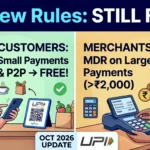 A simple guide to the new UPI MDR rules effective October 15, 2026 — who pays the 0.4% merchant charge, who doesn’t, and why UPI stays free for customers.
 - Sole Proprietorship in India: Do You Need Registration? Documents & Benefits Explained
 Learn how to start a sole proprietorship firm in India, understand registration requirements, benefits, GST and Udyam registration, and discover the essential documents needed to open a business bank account. A simple beginner’s guide to launching your business confidently and correctly.
 - What is HUF? The Ancient Rule Letting Modern Families Unlock Double Tax Benefits
 Want to legally save on income tax? Discover how a Hindu Undivided Family (HUF) protects wealth and maximizes tax benefits. Explore our complete guide on HUF eligibility, the 2005 amendment, and step-by-step instructions to open an HUF bank account.
 - Exposed by RTI: Banks Recover 74% from Small Borrowers, Just 14% from Giants
 Shocking RTI data reveals a massive banking divide: banks recover 74% of bad loans from small borrowers but only 14.5% from corporate giants. Discover why ordinary citizens face harsh recovery agents while large defaulters enjoy massive loan write-offs.
Can you be more specific about the content of your article? After reading it, I still have some doubts. Hope you can help me. https://bankermoney.com
Thanks for your feedback! Please reach me at avpatra09@gmail.com.
Pingback: Cheques Are Back & Faster: Real-Time Clearing System 2026
Can you be more specific about the content of your article? After reading it, I still have some doubts. Hope you can help me.