

Unified Payments Interface (UPI) has become the backbone of India’s digital payments ecosystem, enabling instant, seamless transactions for over 300 million users. With each iteration, UPI adds features that make payments more secure, convenient, and versatile. UPI 3.0, the latest upgrade, brings powerful enhancements designed to elevate everyday transactions and business processes alike. This blog explores UPI 3.0’s new features, practical use cases, and tips to maximize its benefits.
Why UPI 3.0 Matters
Since its launch in 2016, UPI has driven massive growth in digital payments, offering real-time transfers with just a Virtual Payment Address (VPA). Yet as user needs evolve—with growing demand for credit, bulk payouts, and richer merchant tools—the RBI and National Payments Corporation of India (NPCI) continuously refine the platform. UPI 3.0 focuses on:
- Credit support: Integrating small-ticket credit at checkout
- Enhanced merchant capabilities: Streamlining billing and refunds
- Smarter QR codes: Dynamic, multipurpose codes for any scenario
- Recurring payments: Automating bill cycles and subscriptions
These features position UPI 3.0 as more than a peer-to-peer instrument—it becomes a full-fledged payments hub for consumers and businesses.
1. In-App Push Credit (Overlay Credit)
What It Is
Overlay credit allows merchants or apps to offer small-ticket credit (e.g., up to ₹5,000) at the point of sale. Instead of requiring net banking or debit cards, users can opt for pre-approved credit lines.
How It Works
- Pre-Approval: Banks partner with fintech lenders to underwrite credit limits based on credit history.
- In-App Offer: During checkout, the merchant app displays “Pay with UPI + Credit.”
- Seamless Flow: Funds move instantly from the lender’s account to the merchant, and the user repays in 30 days or via EMIs.
Practical Use Case
A grocery app offers ₹2,000 credit for emergency purchases. When a user’s wallet balance is low, they tap “Pay with UPI Credit,” complete the purchase seamlessly, and repay in monthly installments with minimal paperwork.
2. One-Time Mandate for Recurring Payments
What It Is
UPI 3.0 introduces a one-time mandate system for recurring payments, replacing manual auto-debits. Users authorize a merchant once, and subsequent payments occur automatically on scheduled dates.
Key Benefits
- Convenience: No need to re-enter UPI PIN or approve each payment.
- Control: Users can view and revoke mandates directly in their UPI app.
- Transparency: Clear schedules and payment amounts displayed upfront.
Practical Use Case
An OTT streaming service uses a UPI mandate to charge ₹299 monthly. Subscribers authorize this mandate once in their UPI app. On billing dates, the amount debits automatically without further intervention.
3. Invoice in the Inbox
What It Is
Merchants can now push invoices directly into the user’s UPI app inbox. Instead of scanning a QR code, the user reviews and pays the invoice with a tap.
Advantages
- Frictionless Payments: Eliminates QR scanning or entering payment details.
- Record Keeping: All invoices and payment confirmations reside within the UPI app.
- Improved Cash Flow: Faster invoice delivery and settlement for businesses.
Practical Use Case
A freelance graphic designer sends an invoice of ₹5,000 via UPI to a client’s app inbox. The client taps “Pay Invoice,” enters their UPI PIN, and completes payment instantly, with both parties receiving digital receipts.
4. Enhanced QR Code Features
Dynamic QR Codes
UPI 3.0 supports dynamic QR codes that embed transaction variables—amount, merchant ID, and expiration—making them versatile for kiosks, events, and vending machines.
Multi-Purpose QR Codes
A single QR can serve multiple purposes:
- Payment Collection
- Loyalty Points Redemption
- In-App Offers
Practical Use Case
A café places a dynamic QR on tables. When a customer scans it, the UPI app pre-fills the bill amount. After paying, their linked loyalty account receives points automatically.
5. Split Bill and Group Payments
What It Is
Users can now split a bill among multiple contacts directly within their UPI app. The app generates individual payment requests, tracks responses, and settles the total.
Practical Use Case
Friends at dinner split a ₹4,000 bill four ways. One user taps “Split Bill,” selects contacts, and sends UPI payment requests of ₹1,000 each. The app tracks who has paid, and the host only covers any unpaid share.
6. Enhanced Security and Risk Controls
UPI 3.0 leverages AI-driven fraud detection, device-binding, and dynamic risk scoring to minimize unauthorized transactions. Tiered risk thresholds allow smaller payments with minimal friction while demanding stronger authentication for higher-risk activities.
Conclusion
UPI 3.0 represents a significant leap forward, transforming the platform into a comprehensive payments infrastructure for both consumers and businesses. From seamless in-app credit to automated recurring mandates and smarter QR codes, these enhancements promise convenience, transparency, and robust security. By adopting UPI 3.0 features, merchants can boost customer satisfaction, while users enjoy faster, smarter payment experiences. Start exploring these tools today to stay ahead in India’s digital payments revolution.
- The 2026 Nationwide 3 Days Bank Strike: Why India’s Banking Backbone is Breaking
 Discover the root causes of the 2026 nationwide bank strike. Explore the struggle for 5-day banking, fair incentives, and why a Uniform Banking Standard is urgently needed to protect the dignity and job security of all bank employees.
 - UPI MDR 2026: Is UPI Still Free? Here’s the Real Answer
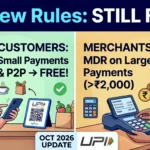 A simple guide to the new UPI MDR rules effective October 15, 2026 — who pays the 0.4% merchant charge, who doesn’t, and why UPI stays free for customers.
 - Sole Proprietorship in India: Do You Need Registration? Documents & Benefits Explained
 Learn how to start a sole proprietorship firm in India, understand registration requirements, benefits, GST and Udyam registration, and discover the essential documents needed to open a business bank account. A simple beginner’s guide to launching your business confidently and correctly.
 - What is HUF? The Ancient Rule Letting Modern Families Unlock Double Tax Benefits
 Want to legally save on income tax? Discover how a Hindu Undivided Family (HUF) protects wealth and maximizes tax benefits. Explore our complete guide on HUF eligibility, the 2005 amendment, and step-by-step instructions to open an HUF bank account.
 - Exposed by RTI: Banks Recover 74% from Small Borrowers, Just 14% from Giants
 Shocking RTI data reveals a massive banking divide: banks recover 74% of bad loans from small borrowers but only 14.5% from corporate giants. Discover why ordinary citizens face harsh recovery agents while large defaulters enjoy massive loan write-offs.
Thanks for sharing. I read many of your blog posts, cool, your blog is very good.
Glad to hear from you! Please keep encouraging with your wonderful feedbacks and share it with your friends and family.
Thanks for your feedback! Please subscribe my channel for more such contents and share it with your friends and family.
Thanks for your feedback! Please subscribe my channel for more such contents and share it with your friends and family. You may reach me at avpatra09@gmail.com
Pingback: Embedded Finance 2026: UPI to Digital Assets Explained
Pingback: Withdraw PF Money in Seconds? EPFO’s New UPI Update is the Game-Changer